The Forbidden Student Who Revolutionized Surgery From the Shadows
The Books That Changed Everything
In 1902, seventeen-year-old Margaret Chen stood outside the medical college gates, watching male students file through doors that would never open for her. The admissions clerk had been brutally clear: "Women have no place in medicine. Find yourself a husband instead."
 Photo: Margaret Chen, via files.rembitteh.ru
What he didn't know was that Margaret had already been studying medicine for three years — in secret, with borrowed textbooks, and without a single professor to guide her.
What started as stubborn curiosity would eventually reshape how surgeons understand the human body. But first, she had to figure out how to learn what no one would teach her.
Midnight Medicine
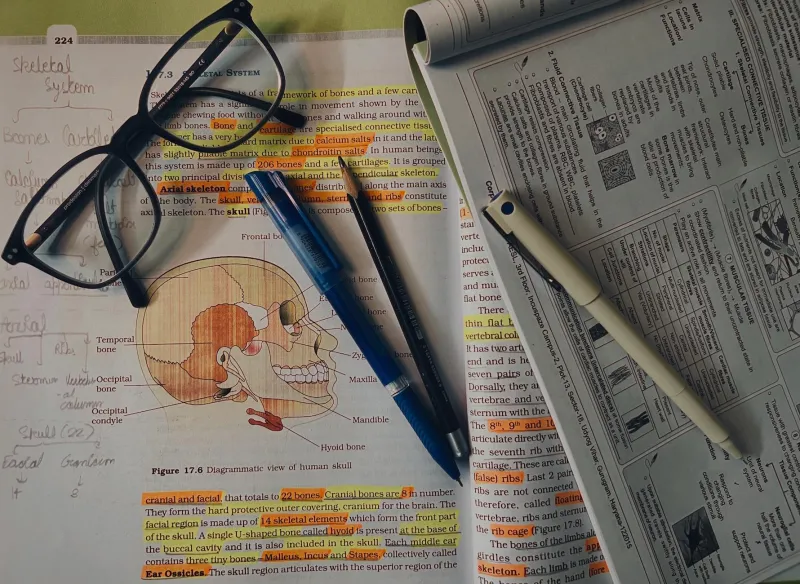
Margaret's education happened in the margins. Her brother William, a first-year medical student, smuggled textbooks home wrapped in newspaper. While her family slept, Margaret memorized anatomical diagrams by candlelight, tracing nerve pathways with her finger until she could draw them from memory.
She haunted the local butcher shop, studying animal anatomy and practicing dissection techniques on scraps. The butcher, amused by her intensity, let her work in the back room after hours. "That girl sees things in a chicken breast that I never noticed," he told his wife.
By age twenty, Margaret had absorbed more anatomical knowledge than most medical school graduates. But knowledge without application is just trivia. She needed to see her theories tested on living patients.
The Unlikely Partnership
Dr. James Morrison was the town's only surgeon, overworked and increasingly desperate for skilled assistance. When Margaret approached him in 1905, offering to work for free in exchange for the chance to observe surgeries, he almost laughed her out of his office.
 Photo: Dr. James Morrison, via livespiffy.co.uk
But Margaret had done her homework. She presented him with detailed anatomical drawings that identified structural patterns he'd never noticed — nerve clusters that seemed to predict surgical complications, blood vessel arrangements that suggested safer incision paths.
"Where did you learn this?" Morrison asked, studying her sketches.
"Books don't care if you're a woman," Margaret replied.
Morrison hired her as his "surgical assistant" — a deliberately vague title that skirted professional regulations. What followed was an unlikely collaboration that would quietly transform surgical practice.
Seeing What Others Missed
Margaret's outsider perspective became her greatest asset. While formally trained surgeons learned established procedures by rote, she approached each case like a puzzle. She noticed patterns that medical schools weren't teaching — how scar tissue formation varied with incision angle, how certain suturing techniques reduced infection rates, how patient positioning affected surgical outcomes.
Her most significant breakthrough came during a routine appendectomy in 1908. The standard approach required a large incision and significant muscle disruption. Margaret suggested a smaller, angled cut that would follow natural tissue planes she'd identified in her anatomical studies.
The surgery was faster, the patient recovered quicker, and complications were minimal. Morrison was intrigued enough to let her develop the technique further.
The Method That Wouldn't Die
Over the next five years, Margaret refined what became known as "Morrison's Method" — though Morrison always credited her privately. The technique reduced surgical trauma by 40% and cut recovery times in half. Word spread through medical circles, and surgeons began traveling to their small town to observe the mysterious new approach.
Margaret remained in the background, officially listed as a "research assistant." She documented every procedure, compiled statistical analyses, and developed training protocols. Her detailed notes filled dozens of journals, creating the first systematic study of minimally invasive surgical techniques.
When Morrison presented their findings at the 1913 American Medical Association conference, the response was explosive. Surgeons across the country began adopting Margaret's methods, though few knew her name.
The Recognition That Never Came
Margaret never received formal credit for her contributions. She couldn't join medical societies, publish papers under her own name, or practice independently. But her techniques became standard practice, taught in medical schools that still wouldn't admit women.
By 1920, variations of "Morrison's Method" were being used in hospitals nationwide. The approach Margaret developed in secret had become foundational to modern surgical practice, saving countless lives and reducing patient suffering immeasurably.
Dr. Morrison, to his credit, spent his later years advocating for women in medicine. He often said his greatest professional achievement was recognizing Margaret's genius and getting out of her way.
The Legacy That Lives
Today, Margaret Chen's influence is everywhere in modern surgery, though her name appears in few textbooks. The minimally invasive techniques she pioneered evolved into laparoscopic surgery, robotic procedures, and precision medicine approaches that define contemporary practice.
Her story reminds us that innovation often comes from the margins — from people who see problems differently because they've been forced to think differently. Sometimes the greatest breakthroughs happen not despite exclusion, but because of it.
The girl who learned medicine in secret didn't just master the system that rejected her. She improved it beyond recognition, leaving a legacy that continues to heal millions of people who will never know her name.
In the end, perhaps that's the most profound victory of all — changing the world so completely that your revolution becomes invisible, woven into the fabric of progress itself.