When Latin Lived in a Lunchbox: The Cemetery Worker Who Cracked Ancient Rome's Code
The Scholar Nobody Expected
In 1847, while Harvard's classics professors debated the finer points of Cicero in their mahogany-paneled offices, Thomas Murphy was learning the same language in a cemetery toolshed. Murphy, a gravedigger at Boston's Mount Auburn Cemetery, had noticed something that bothered him: half the Latin inscriptions he carved on headstones made no grammatical sense.
 Photo: Mount Auburn Cemetery, via s3.ppllstatics.com
 Photo: Thomas Murphy, via wallpapercave.com
What began as professional curiosity—wanting to spell the dead's final words correctly—evolved into something unprecedented in American academia. Murphy, who had never set foot in a classroom past age twelve, was about to produce a translation of Tacitus that would make the country's most credentialed scholars look like amateurs.
The Midnight University
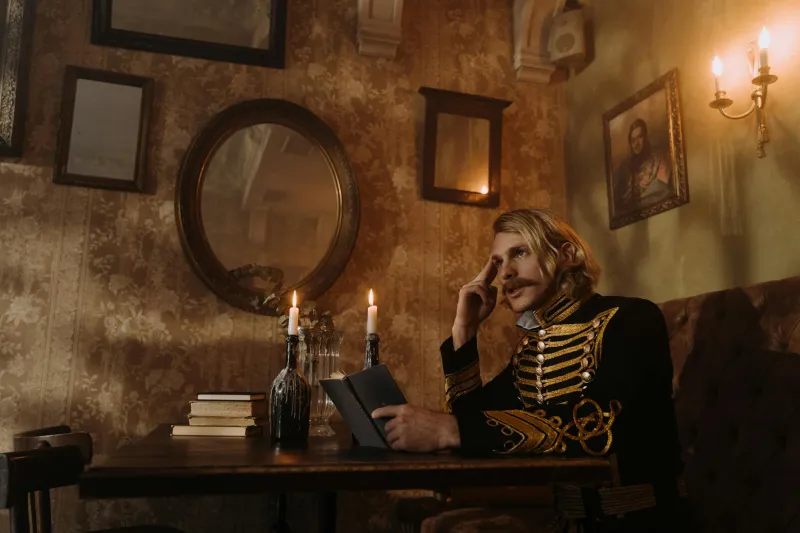
Murphy's education happened in stolen moments. During lunch breaks, he'd pull out a tattered Latin grammar book he'd bought for fifty cents from a used bookstall. After his shift ended at sunset, he'd light a candle in the cemetery's equipment shed and work through conjugations until his eyes burned.
 Photo: Harvard University, via ecdn.teacherspayteachers.com
The other gravediggers thought he'd lost his mind. "Tom's talking to dead Romans again," they'd joke when they found him muttering Latin phrases while digging. But Murphy had discovered something intoxicating: every word he learned unlocked another piece of a civilization that had been dead for centuries yet somehow felt more alive than his daily routine.
His breakthrough came when he realized the cemetery's oldest sections contained inscriptions dating back to the 1600s. These weren't just practice exercises—they were primary sources. Murphy began cataloging every Latin phrase in Mount Auburn, creating his own database of how the language had been used in America across two centuries.
The Translation That Stunned Boston
By 1852, Murphy had taught himself enough Latin to tackle serious literature. He chose Tacitus's "Agricola"—a notoriously difficult text that had challenged translators for generations. Working by candlelight in his one-room boarding house, Murphy spent three years crafting a translation that captured not just the meaning but the rhythm of Tacitus's famously complex prose.
When he submitted his manuscript to a Boston publisher, the editor assumed it was the work of a Harvard professor writing under a pseudonym. The translation was too sophisticated, too nuanced to come from someone without formal training. When Murphy showed up for the meeting—dirt still under his fingernails from the morning's work—the editor nearly threw him out.
But the manuscript spoke for itself. Murphy's translation wasn't just accurate; it was elegant. Where other translators had stumbled over Tacitus's intricate sentence structures, Murphy had found English equivalents that preserved both meaning and music. His years of reading Latin inscriptions had given him an intuitive feel for how the language actually worked, not just how textbooks said it should work.
The Scholar Without a School
When "Tacitus: A New Translation by T. Murphy" appeared in bookstores in 1855, it created a sensation. The Boston Globe called it "a translation of extraordinary merit from a most extraordinary source." Harvard's classics department, initially skeptical, grudgingly admitted that Murphy had produced something special.
But Murphy's success exposed an uncomfortable truth about American education. While universities were training classical scholars in theory, a gravedigger had surpassed them in practice. Murphy understood Latin not as a dead language to be dissected, but as a living tool for expressing complex ideas. His translation read like literature, not homework.
The academic establishment didn't know what to do with him. Harvard offered him a position as a "consulting translator," but Murphy declined. He preferred his cemetery work, where he could think freely without the pressure of academic politics. "I learned Latin to understand the inscriptions," he told a reporter. "Now I understand them better than the men who wrote them."
The Legacy of Unlikely Scholarship
Murphy's translation remained the standard English version of "Agricola" for over forty years. Modern scholars still cite his work, often without knowing the translator's background. His success opened doors for other working-class autodidacts, proving that intellectual achievement didn't require institutional credentials.
More importantly, Murphy's story revealed something profound about how learning actually happens. While Harvard students memorized declensions in comfortable classrooms, Murphy absorbed Latin through daily contact with its practical applications. His translation succeeded because he understood the language as Romans had used it—as a tool for communication, not academic exercise.
Today, Mount Auburn Cemetery still displays some of Murphy's original inscriptions. Visitors often pause to read them, unaware they're looking at the work of one of America's most unlikely classical scholars. In a twist Tacitus himself might have appreciated, the gravedigger achieved a form of immortality that eluded most of his formally educated contemporaries.
Murphy proved that expertise doesn't always come with diplomas. Sometimes it comes from paying attention to the details everyone else overlooks, then having the audacity to believe you can do better than the experts. In his case, the odds were beaten not with credentials or connections, but with candlelight and curiosity.