She Was Supposed to Pour the Coffee. Instead, She Calculated the Math That Put John Glenn in Orbit.
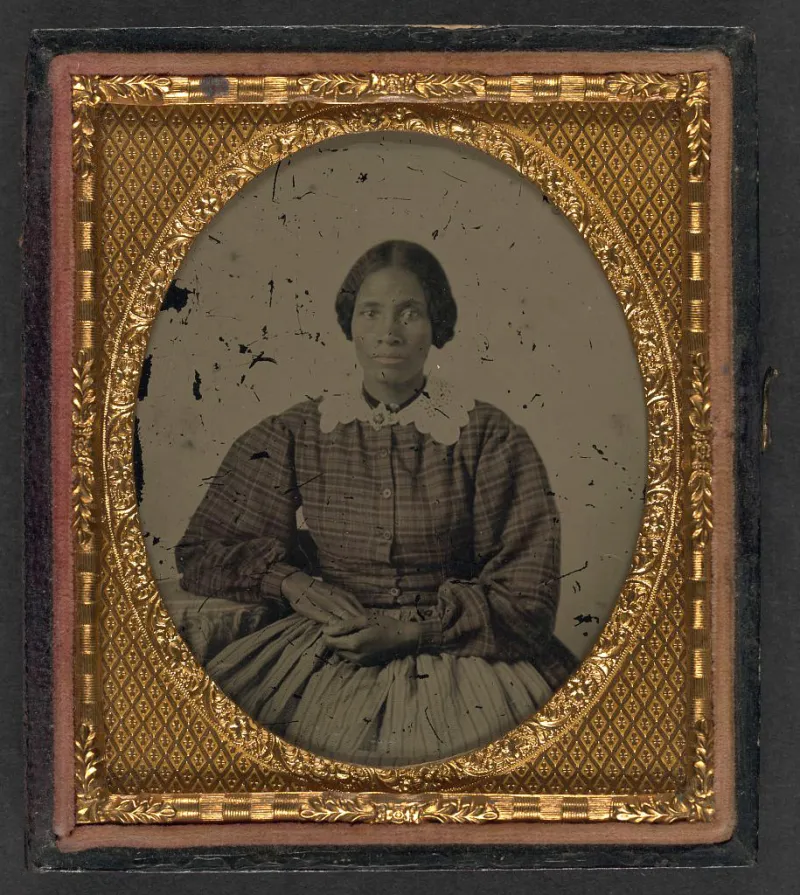
Photo: The Library of Congress, No restrictions, via Wikimedia Commons
There's a particular kind of invisibility that systems of exclusion create — one that works so well the people inside it sometimes don't notice what they're actually looking at. Katherine Johnson spent years inside that invisibility. And then, one day in 1962, John Glenn looked right at it and said: I won't fly until she checks the numbers.
 Photo: John Glenn, via c8.alamy.com
 Photo: Katherine Johnson, via cdn.britannica.com
That moment — a decorated Marine combat pilot, America's most celebrated astronaut, refusing to board a rocket unless a Black woman in a segregated computing pool personally verified the electronic computer's orbital calculations — is one of the most quietly extraordinary scenes in American history. It's also, if you follow the thread back far enough, the story of a system that tried to limit Katherine Johnson and instead handed her the most consequential mathematics in the country.
The Town That Couldn't Contain Her
Katherine Coleman was born in 1918 in White Sulphur Springs, West Virginia, a small town with a clear ceiling for Black residents. The local schools stopped at eighth grade for Black children — not because of any shortage of students, but because the system had decided that was enough.
Her father, Joshua Coleman, had other ideas. He drove his family 120 miles to Institute, West Virginia, so Katherine and her siblings could attend high school. She was ten years old when she started. She graduated at fourteen. By eighteen, she had a degree from West Virginia State College, double-majoring in mathematics and French, having worked through the curriculum so quickly that her professors essentially invented new courses to keep her challenged.
One of those professors, W.W. Schieffelin Claytor — one of the first Black men to earn a Ph.D. in mathematics in the United States — recognized what he had in his classroom. He created a course in analytic geometry specifically because Katherine needed it for the career he could already see she was built for. He told her directly: you should be a research mathematician. Then he spent years preparing her for a research world that wasn't sure it wanted her.
The Room at the End of the Hall
In 1953, Katherine Johnson was hired by the National Advisory Committee for Aeronautics — the organization that would become NASA — as a "human computer." The job title tells you something about the era: before electronic computing was reliable or widespread, complex mathematical calculations were performed by teams of people, mostly women, working through equations by hand.
At NACA's Langley Research Center in Hampton, Virginia, Black women computers were assigned to a specific, segregated unit. They worked in a separate building. They ate in a separate cafeteria. There was a sign on a bathroom designating it for "colored" employees. The sign, according to Johnson's own account, had a habit of disappearing. She had a habit of using whatever bathroom was convenient.
 Photo: Langley Research Center, via www.wric.com
The work itself, though, didn't know about the segregation. Numbers are numbers. And Katherine Johnson was exceptionally good at them.
She had a specific gift for what's called analytic geometry — the mathematics of curves and trajectories through three-dimensional space. For an organization suddenly consumed by the challenge of sending objects into space and bringing them back, this was not a minor specialty. It was the whole problem.
The Astronaut Who Needed Her Name on It
She was assigned temporarily to the all-white, all-male Flight Research Division — supposedly for a few weeks. She stayed for four years. She asked to attend editorial briefings that women didn't attend. When she was told that no women had ever attended, she asked if there was a rule against it. There wasn't. She attended.
By 1958, when NACA became NASA and the space race kicked into something resembling controlled panic, Katherine Johnson was already one of the most reliable mathematical minds in the organization. She co-authored a 1960 paper on orbital mechanics — the first time a woman in her division had been credited as an author on a research report. She calculated the trajectory for Alan Shepard's 1961 Freedom 7 mission, the first American spaceflight.
And then came John Glenn.
For Glenn's 1962 Friendship 7 orbital mission, NASA had begun using electronic computers to calculate the flight path. It was faster, it was consistent, and it represented the direction the agency was heading. Glenn, for his part, didn't fully trust it. Electronic computers were still relatively new, and the stakes — a human being in orbit around the Earth, with a reentry window that had to be mathematically precise — were not the kind of stakes you tested experimental equipment on.
He asked, specifically, for Katherine Johnson to verify the numbers. His reported words, according to multiple accounts, were some version of: "If she says the numbers are good, I'm ready to go."
She went through the calculations by hand. They matched. Glenn flew. The mission was a success.
What the System Got Wrong About Itself
The architecture of segregation at NASA was built on a specific assumption: that the people it was designed to contain were less capable, less essential, less central to the mission. That assumption was wrong in a way that became impossible to ignore on February 20, 1962, when the most important spaceflight America had yet attempted required the personal sign-off of a Black woman from a segregated computing pool in Hampton, Virginia.
Katherine Johnson didn't get there despite the system. She got there in a way the system hadn't anticipated — by being so undeniably, precisely excellent that the mission itself couldn't proceed without her. The walls that were supposed to keep her peripheral instead kept her close to the most critical work. The segregated unit that was meant to minimize her visibility put her in the same building as the problems she was uniquely equipped to solve.
She went on to work on the Apollo program, including the calculations for the lunar orbit rendezvous that made the moon landing possible. She worked on the Space Shuttle program. She retired from NASA in 1986 after thirty-three years, having co-authored twenty-six research reports.
In 2015, President Obama awarded her the Presidential Medal of Freedom. In 2016, NASA named a building after her — the Katherine G. Johnson Computational Research Facility at Langley. She was ninety-seven years old and still sharp enough to give a speech about it.
The Lesson Hidden in the Numbers
Katherine Johnson died in 2020 at the age of 101. The obituaries were long and well-deserved. But the detail that keeps pulling at you isn't the awards or the accolades. It's that moment in 1962 — the astronaut who wouldn't fly without her, the hand-checked calculations, the fact that the entire American space program held its breath while a woman the system had tried to make invisible confirmed the math.
Talent, the story keeps insisting, doesn't care about the walls you build around it. It finds the cracks. It works through them. And eventually, if you're paying attention, you realize the walls were never as solid as you thought.