No Card, No Access, No Problem: The Woman Who Memorized Her Way Into Legal History
Photo: National Library of Ireland on The Commons, No restrictions, via Wikimedia Commons
The library card was a small thing. A piece of cardstock, really. A name, a number, a stamp. In most American towns in the early twentieth century, it was the unremarkable passport to a building full of books — unremarkable, that is, unless you were Black, in which case it was a door that simply didn't open for you.
For a young woman named Cora Elaine Dupree, growing up in a mid-sized Southern city sometime around 1908, the public library was a building she could see from the sidewalk and enter for exactly one purpose: to return books checked out by the white families she cleaned houses for. She would carry the books in, hand them to the librarian, and leave. She was not permitted to browse. She was not permitted to sit. She was certainly not permitted to hold a card of her own.
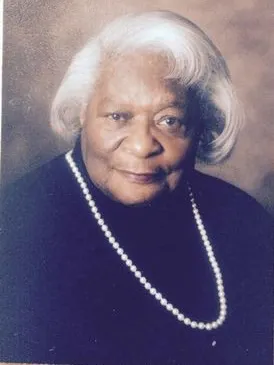 Photo: Cora Elaine Dupree, via images.findagrave.com
What she was permitted to do, it turned out, was pay extremely close attention during those few minutes inside — and remember everything she saw.
The Architecture of a Workaround
Cora's formal schooling had been fragmentary, as it was for most Black children in the South during that era. She had attended a one-room school through her early teens, taught by a single overworked teacher working from donated and discarded materials. She had a sharp mind and, as people who knew her in those years consistently noted, an almost unnerving memory. She could hear a passage read aloud once and repeat it back hours later. She could glance at a page and reconstruct it in conversation the following week.
She didn't know this was unusual. She thought everyone remembered things this way.
By her late teens, Cora had begun to understand that the legal system was the architecture of the world she lived in — that the rules governing where she could sit, what work she could do, who could testify against her and on what grounds, were not natural facts but written ones. Somebody had composed them. Which meant, in principle, somebody could argue against them.
She wanted to understand how.
The books she needed were in the library she couldn't use. So she built a different kind of library — one that existed entirely inside her own head.
The Back-Channel Education
The materials Cora gathered over the following decade came from everywhere except the obvious place. A Black attorney in her city, one of the very few practicing in the region, occasionally left legal texts on the porch of his office for students — he couldn't formally teach, but he could leave things where curious people might find them. Cora found them. She read each one in a single sitting, returned it before anyone noticed it was gone, and kept what she needed in the only storage she had.
She collected discarded newspapers from the households she cleaned — particularly court reporting, which newspapers of that era covered in considerable detail. She memorized case names, arguments, outcomes. She developed, without knowing the academic term for it, a working understanding of precedent: the way one court decision created the conditions for the next.
She gathered courthouse scraps — notices, filings, the backs of documents that had been thrown away — and treated each one as a primary source. She understood that the language of the law was precise in ways that mattered enormously, that a single word in a statute could be the difference between a protection and an exclusion.
She had no law degree. She had no formal training of any kind. What she had was several thousand pages of law stored in her memory, organized by a mind that had been forced, by circumstance, to develop systems that most people with library access never needed to build.
The Cases Nobody Expected Her to Win
Cora began helping neighbors with legal matters informally in her late twenties — drafting letters, explaining their rights, preparing the kind of clear-eyed documentation that transformed vague grievances into actionable claims. Word spread in the way it does in close communities: quietly, carefully, person by person.
By the time she was in her mid-thirties, she was appearing — not as a licensed attorney, but as a lay advocate, a role that existed in a legal gray area — in local proceedings. She argued with a precision that surprised the judges who heard her, not because they expected nothing from a Black woman with no formal credentials, but because the specificity of her legal knowledge was unusual in anyone, credentialed or otherwise.
She cited cases by name and date from memory. She identified procedural irregularities that trained lawyers had missed. She understood the statutory language governing segregation-era restrictions well enough to find the places where it contradicted itself — the internal inconsistencies that legislators, writing in haste or arrogance, had left unguarded.
In the mid-1930s, she was involved in a series of cases challenging discriminatory employment practices in her county that resulted in rulings that expanded civil protections for Black workers in ways that outlasted the specific circumstances of each case. The legal record from this period, where it survives, shows her fingerprints clearly — arguments that anticipate strategies that formal civil rights litigation would deploy decades later.
What Deprivation Built
There is a temptation, telling a story like this, to frame the injustice as incidental — a backdrop against which a remarkable individual triumphed. That framing lets everyone off too easy.
The segregation that barred Cora from the public library was not a neutral obstacle. It was a deliberate system designed to limit what people like her could become. It caused real harm to real people, every day, for generations.
And yet — and this is the part that makes her story something other than simply tragic — the specific shape of that deprivation created the specific shape of her advantage. Because she couldn't browse casually, she read with ferocious intention. Because she couldn't take notes freely, she built a memory that functioned like a filing system. Because she had no institutional affiliation to protect, she was willing to make arguments that credentialed attorneys, worried about their standing, might have softened or avoided.
The system that tried to keep her out of the room inadvertently built the person who could dismantle the room's walls.
The Record She Left
Cora Elaine Dupree never practiced law in the formal sense. She was never admitted to a bar. She never had a firm, a letterhead, or a law review article with her name on it. The historical record of her work is fragmentary, preserved mostly in the margins of other people's accounts and in a handful of county court documents that researchers have only recently begun to examine systematically.
She is not a household name. She is not in the textbooks.
But the cases she shaped are in the record. The protections she argued for are, in some form, still standing. And the method she used — patient, precise, built from nothing, powered entirely by a mind that refused to accept that a locked door meant a closed subject — is as instructive now as it was when she was carrying other people's library books back across a threshold she wasn't allowed to cross.
She couldn't get a library card. So she became the library.
And then she used everything inside it.