The Spectacular Failures
The letter from Cravath, Swaine & Moore was politely brutal: "While we appreciate your interest in our firm, we do not believe your academic record reflects the caliber of legal mind we seek." It was the fifteenth rejection letter Robert "Bobby" Hartwell had received in six months.
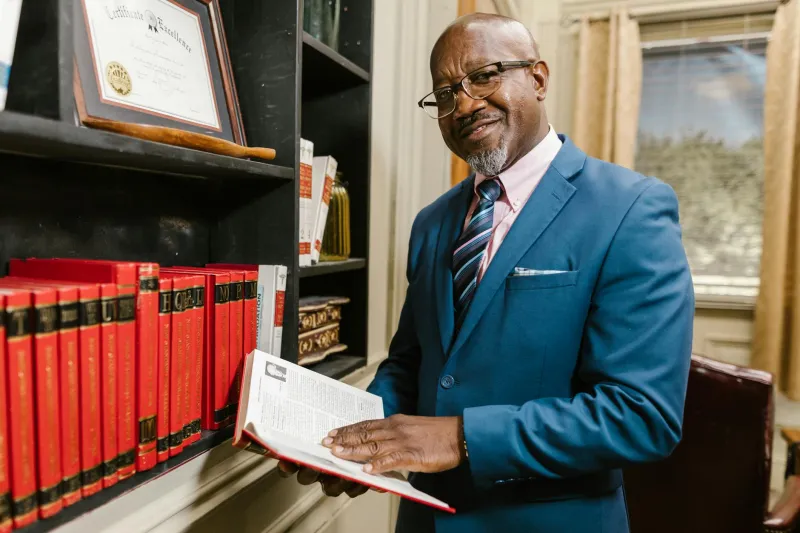
 Photo: Robert "Bobby" Hartwell, via prod-images-static.radiopaedia.org
The irony was crushing. Bobby had graduated from Yale Law School, but barely. He'd failed the Connecticut bar exam twice before squeaking through on his third attempt. Every white-shoe firm in New York had shown him the door, usually before he'd finished explaining his constitutional theories.
 Photo: Yale Law School, via icdn.lenta.ru
"You think too much," one senior partner told him in 1963. "Law is about precedent, not philosophy. Find a nice corporate position and forget about changing the world."
Bobby took the train back to Millbrook, Connecticut, population 3,400, where his uncle ran a small practice handling wills, divorces, and property disputes. It felt like exile from everything he'd dreamed of accomplishing.
 Photo: Millbrook, Connecticut, via media.muckrack.com
He had no idea he was about to accidentally revolutionize American constitutional law.
The Unlikely Laboratory
Millbrook's legal needs were humble: farmers arguing over property lines, shop owners dealing with contracts, families navigating inheritance disputes. It was exactly the kind of mundane practice that ambitious lawyers avoided.
But Bobby discovered something unexpected in small-town law: constitutional questions were everywhere, hiding in plain sight.
A local school board wanted to ban certain books. A town council tried to restrict religious gatherings. A developer claimed eminent domain over a family farm. Each case involved fundamental questions about government power, individual rights, and constitutional interpretation.
The difference was that in Millbrook, Bobby could explore these questions without senior partners breathing down his neck. No one cared if he spent weeks researching obscure constitutional precedents for a $500 case. His "overthinking" — the trait that made him unemployable at big firms — finally had room to flourish.
The Theory That Changed Everything
By 1967, Bobby had developed what he called "Living Constitution Theory" — the idea that constitutional interpretation should evolve with changing social conditions rather than remain frozen in 18th-century assumptions.
It wasn't entirely original, but Bobby's approach was different. Instead of academic abstractions, he grounded his theory in real cases involving real people. His constitutional arguments grew from defending a farmer's property rights, not from ivory tower speculation.
The breakthrough case came in 1969. Millbrook's town council tried to prevent a Black family from opening a restaurant downtown, citing a century-old ordinance about "maintaining community character." The family couldn't afford expensive lawyers, so they hired Bobby for $200.
Bobby's defense didn't just challenge the ordinance — it challenged the entire framework of how courts interpreted constitutional rights. His brief argued that constitutional protections must expand to meet new forms of discrimination, even when the founders couldn't have imagined the specific circumstances.
The Connecticut Supreme Court not only ruled in his favor but adopted his reasoning wholesale. Legal scholars began paying attention to the small-town lawyer with the big constitutional ideas.
The Accidental Revolution
Word of Bobby's constitutional theories spread through legal circles like wildfire. Law professors invited him to speak. Civil rights organizations sought his expertise. The same firms that had rejected him now wanted to hire him as a consultant.
But Bobby stayed in Millbrook. He'd found something more valuable than prestige: intellectual freedom.
Between 1970 and 1980, Bobby wrote seventeen law review articles that fundamentally reshaped constitutional interpretation. His "Living Constitution" framework was cited in hundreds of court decisions, including three Supreme Court cases that expanded civil rights protections.
The American Bar Association gave him their highest honor in 1979. Harvard offered him a tenured professorship. The Justice Department tried to recruit him. Bobby politely declined everything, preferring his small-town practice where he could think freely.
The Influence That Endures
By 1985, Bobby Hartwell had become the most cited constitutional scholar of his generation — despite never working for a major firm, never teaching at an elite law school, and never arguing before the Supreme Court.
His theories influenced landmark decisions on voting rights, religious freedom, and equal protection. Justices across the political spectrum cited his work. Law students studied his cases without knowing they'd originated from disputes over small-town zoning ordinances and school board policies.
The legal establishment finally understood what they'd missed: Bobby's failures had been his greatest assets. His distance from elite legal culture had given him the intellectual space to question assumptions that credentialed insiders couldn't afford to challenge.
The Wisdom of Exile
Bobby's story reveals something profound about innovation and institutional thinking. The same "overthinking" that made him unemployable at prestigious firms was exactly what constitutional law needed. His academic struggles had taught him to approach problems from unexpected angles. His professional rejections had freed him from conventional wisdom.
Most importantly, his small-town practice had grounded his theories in human reality rather than academic abstraction. He developed constitutional principles not in law library seminars, but while defending farmers and shop owners whose rights were being trampled by local authorities.
The legal elite had been wrong about Bobby Hartwell — spectacularly, embarrassingly wrong. Their rejection had accidentally created the conditions for his greatest success.
The Legacy of Failure
When Bobby died in 1998, the Supreme Court held a rare memorial session in his honor. Chief Justice William Rehnquist called him "the most influential constitutional thinker of the late 20th century." Justice Ruth Bader Ginsburg credited his theories with advancing civil rights by decades.
Cravath, Swaine & Moore — the firm that had rejected him 35 years earlier — established a fellowship in his name. The irony was perfect: the lawyer they'd deemed unworthy of employment had become too important to ignore.
Bobby's path from failure to influence offers a powerful reminder that institutions don't always recognize genius, especially when it comes packaged differently than they expect. Sometimes the most important work happens not despite professional rejection, but because of it.
The country lawyer who failed his way to the top had proven that distance from power can be the best position from which to transform it. His legacy lives in every constitutional case that expands rights, protects minorities, and adapts founding principles to contemporary challenges.
Not bad for someone who couldn't pass the bar exam on his first try.