The Observatory Without Walls
On clear nights in the 1950s, when the desert air hung still and the nearest electric light was forty miles away, Tommy Begay would climb the mesa behind his family's hogan and spread a worn blanket on the sandstone. His telescope was a pair of eyes that had learned to see what others missed. His laboratory was the entire southwestern sky.
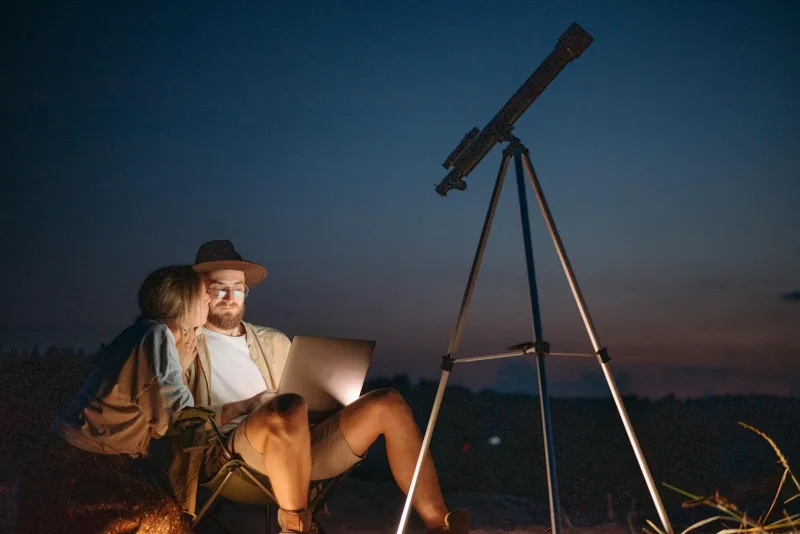
 Photo: Tommy Begay, via heavy.com
While his classmates at the Bureau of Indian Affairs boarding school memorized multiplication tables, Begay was calculating the orbital periods of planets. While America debated whether it was possible to reach space, he was charting the pathways already written in starlight.
Nobody told him this knowledge would matter. Nobody told him it was impossible to learn astronomy without instruments, without electricity, without permission from the scientific establishment.
Good thing nobody told him.
The Education That Wasn't Supposed to Exist
Begay's astronomical education began with his grandfather, who taught him the traditional Navajo star knowledge passed down through generations. But where tradition ended, curiosity took over.
Using a battered almanac from the trading post and library books borrowed during rare trips to Flagstaff, Begay taught himself celestial mechanics, orbital dynamics, and mathematical astronomy. His notebooks, filled with calculations scratched in pencil and charcoal, tracked planetary positions with accuracy that would have impressed professional observatories.
He had no idea that professional observatories existed.
"I just wanted to understand what I was seeing," Begay later recalled. "The stars told stories every night. I wanted to learn the language."
By age sixteen, he could predict eclipses, calculate the positions of planets months in advance, and identify stellar phenomena that most amateur astronomers never notice. His observations were recorded in composition notebooks that cost a quarter each at the trading post—his most expensive scientific instruments.
The Discovery That Changed Everything
In 1957, the same year Sputnik shocked America into the space race, Begay made an observation that would eventually reach the highest levels of NASA. While tracking what he thought was an unusual asteroid, he noticed its movement didn't match any known orbital pattern.
Using calculations learned from library books and refined through years of practice, he determined that the object's trajectory suggested it was artificial—a conclusion that seemed impossible until he heard radio reports about Soviet satellites.
Begay had independently discovered and tracked Sputnik using only naked-eye observation and mathematical analysis.
His detailed notes, including precise calculations of the satellite's orbital decay, were more accurate than data from several professional observatories. But nobody knew he existed.
When Worlds Collided
Begay's invisibility ended in 1960 when Dr. Margaret Chen, an astronomer from Lowell Observatory, visited the reservation to study light pollution patterns. A trading post clerk mentioned the "Indian boy who knows about stars," and Chen decided to investigate.
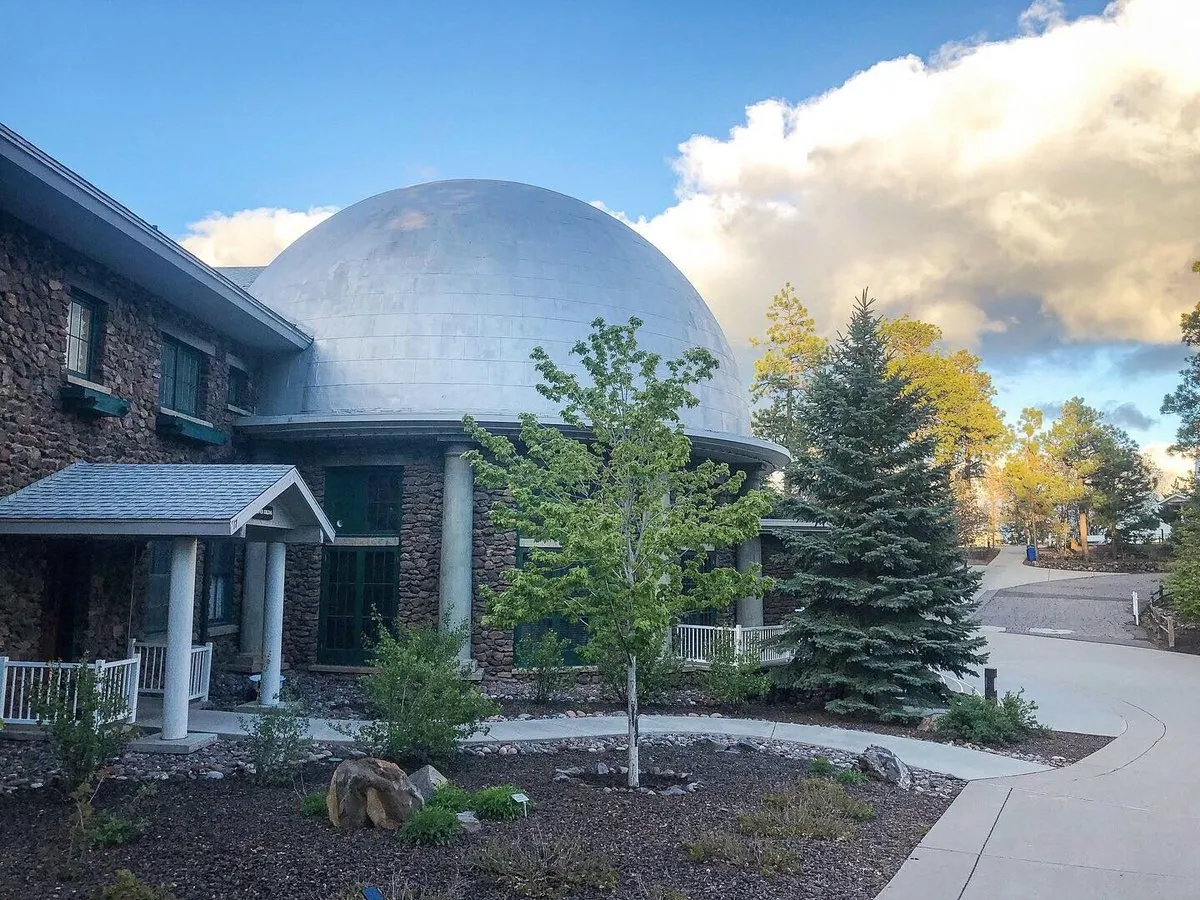 Photo: Lowell Observatory, via dynamic-media-cdn.tripadvisor.com
She expected to find traditional star lore, perhaps some basic constellation knowledge. Instead, she discovered astronomical observations that rivaled professional research.
"Tommy showed me notebooks filled with planetary position calculations that were accurate to within minutes of arc," Chen later wrote. "He'd been tracking satellite orbits, predicting meteor showers, and documenting stellar variability using nothing but his eyes and remarkable mathematical intuition."
Chen realized she was looking at raw astronomical talent that had developed in complete isolation from the scientific community.
The Mentor Who Opened Doors
Chen became Begay's bridge to the astronomical establishment. She arranged for him to visit Lowell Observatory, where his observations were compared against professional data. The results were stunning: his naked-eye tracking of satellite positions was often more accurate than telescope observations from other facilities.
More importantly, Begay's observational techniques—developed from necessity and refined through practice—offered insights that instrument-dependent astronomers had missed.
"Tommy saw the sky as a dynamic system," Chen explained. "While we focused on individual objects through telescopes, he tracked relationships and patterns across the entire celestial sphere."
The NASA Connection
As America's space program accelerated, NASA needed precise astronomical data for mission planning. Begay's observations, particularly his satellite tracking methodology, caught the attention of trajectory specialists at the Jet Propulsion Laboratory.
 Photo: Jet Propulsion Laboratory, via www.energy.gov
In 1962, at age nineteen, Begay was quietly recruited as a consultant for the Gemini program. His job: provide ground-truth observations for orbital calculations and help verify satellite tracking data.
Working from the same mesa where he'd learned to read the stars, Begay became part of America's space program. His reports, filed from a reservation that didn't have reliable telephone service, helped guide spacecraft that would eventually reach the moon.
Beyond the Observatory
Begay's contributions extended beyond satellite tracking. His observational techniques, developed from years of naked-eye astronomy, provided NASA with new methods for visual spacecraft identification and orbital verification.
His integration of traditional Navajo astronomical knowledge with modern celestial mechanics created hybrid approaches that proved more effective than purely technological solutions.
Most remarkably, his work demonstrated that sophisticated astronomical research was possible with minimal equipment—a discovery that influenced NASA's approach to space-based observation and emergency navigation procedures.
The Recognition That Came Too Late
By the time Begay received formal recognition for his contributions, he'd already helped guide America's early space missions from his desert observatory. In 1969, as Neil Armstrong walked on the moon, Begay watched from the same mesa where he'd first learned to track satellites.
NASA eventually offered him positions at major observatories and research facilities. He declined most of them, preferring to continue his observations from the reservation while consulting on projects that interested him.
"The stars are the same everywhere," he explained. "But the seeing is better here."
The Legacy Written in Starlight
Today, Begay's observational techniques are taught at astronomical institutions worldwide. His integration of traditional knowledge with modern science helped establish the field of indigenous astronomy. His work demonstrated that scientific excellence can emerge from the most unlikely circumstances.
More profoundly, his story reveals how genius develops when freed from institutional constraints. Without access to formal education or professional equipment, Begay created his own astronomical tradition—one that proved more innovative than many established approaches.
The boy who learned astronomy under desert stars helped America reach for space. His observatory without walls became a launching pad for dreams that had no limits.
On clear nights, Tommy Begay still climbs the mesa behind his family's hogan. The stars still tell their stories. And somewhere overhead, satellites follow paths he helped map decades ago, when the space age was young and anything seemed possible under the infinite southwestern sky.