The Professor Who Calculated in Darkness: How Total Blindness Unlocked Mathematical Genius
The Day Numbers Became Everything
Bernard Morin was twelve when the world went black. A rare eye disease stole his vision overnight, transforming a curious French schoolboy into what his teachers called "a mathematical impossibility." In 1950s France, blind children weren't expected to pursue advanced mathematics. They learned practical trades—basket weaving, piano tuning, telephone operation. Calculus and theoretical geometry? Absolutely out of the question.
 Photo: Bernard Morin, via www.artmajeur.com
But Morin had other plans. While his classmates relied on chalkboards and textbooks, he developed something far more powerful: a three-dimensional mathematical imagination that existed entirely in his mind.
When Rejection Became Rocket Fuel
Every university rejected him. "Mathematics is a visual discipline," they explained politely. "How can you understand geometry without seeing diagrams?" The question would have crushed most teenagers. For Morin, it became a challenge worth dedicating his life to answering.
He enrolled at the École Normale Supérieure anyway, auditing classes and proving his professors spectacularly wrong. While sighted students struggled to visualize complex geometric transformations on paper, Morin manipulated them effortlessly in his head. He could "see" mathematical objects rotating in four-dimensional space, bending and folding in ways that existed only in the realm of pure thought.
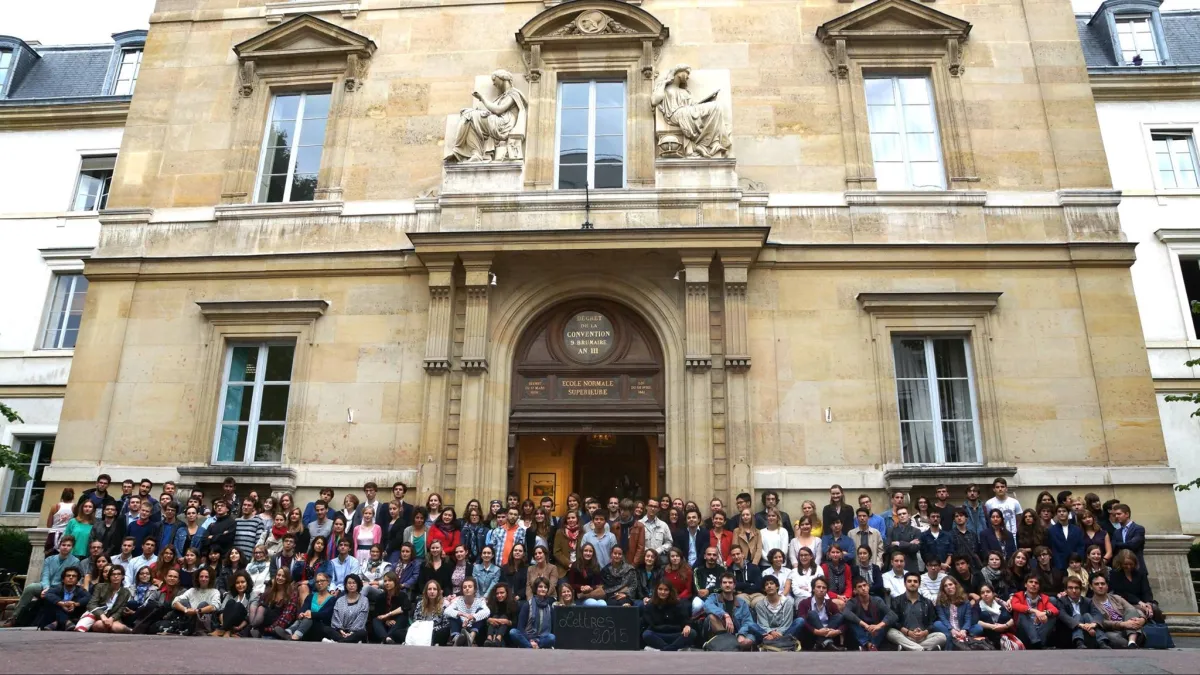 Photo: École Normale Supérieure, via smapse.com
The Impossible Made Possible
By the 1960s, Morin had become France's most unlikely mathematical celebrity. His specialty? Topology—the study of shapes and spaces that can be bent, stretched, and twisted without breaking. It's abstract work that challenges even brilliant minds, but Morin approached it like a sculptor working with invisible clay.
His breakthrough came with something called "sphere eversion"—a mathematical puzzle that had stumped geometers for decades. The challenge: prove whether you could turn a sphere inside-out without tearing or puncturing it. Most mathematicians insisted it was impossible. Morin proved them wrong.
Working purely through mental visualization, he constructed the first complete proof that sphere eversion was not only possible but elegant. He couldn't draw the solution, so he described it in words so precise that other mathematicians could follow his mental journey step by step.
Teaching Without Seeing
When Princeton University invited Morin to lecture, colleagues wondered how a blind mathematician could possibly teach visual concepts to sighted students. They discovered something remarkable: Morin's students understood topology better than those taught by traditional methods.
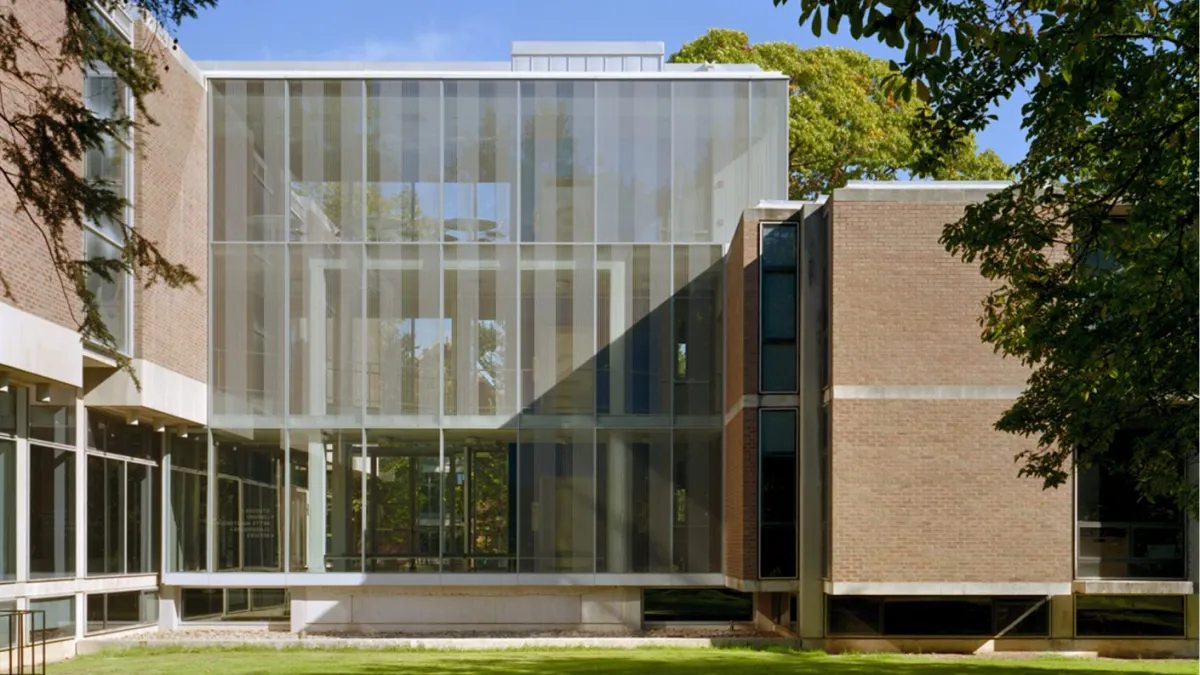 Photo: Princeton University, via www.aro.net
Without the crutch of diagrams, Morin forced his students to develop the same three-dimensional mathematical intuition that had made him famous. His lectures became legendary—not despite his blindness, but because of how it had sharpened his mathematical vision.
"I see mathematics more clearly than most people see the world," Morin once explained. "When you can't rely on your eyes, your mind builds something much more powerful."
The Vision That Changed Everything
Morin's work revolutionized how mathematicians approach abstract problems. His techniques for mental visualization became standard teaching methods. His sphere eversion proof opened entirely new fields of mathematical research. Today, computer simulations can finally show what Morin saw in his mind decades earlier—and they confirm he was right about everything.
The boy who was told mathematics required sight became the mathematician who taught the world how to see. His legacy lives in every topology classroom, every geometric proof, every moment when a student closes their eyes and suddenly understands a concept that seemed impossible moments before.
Bernard Morin proved that the most profound insights often come not from what we can see, but from learning to navigate the spaces our eyes can never reach. Sometimes the greatest vision emerges from complete darkness.