Thread by Thread: The Housekeeper Whose Secret Art Rewrote American History
The Art They Called Housework
Every morning at dawn, Harriet Powers walked through the back door of yet another wealthy home in Athens, Georgia. She scrubbed floors, washed dishes, and tended to the endless needs of families who barely acknowledged her existence. But when the sun set and her employers retired to their comfortable beds, Powers returned to her own modest cabin to create something extraordinary.
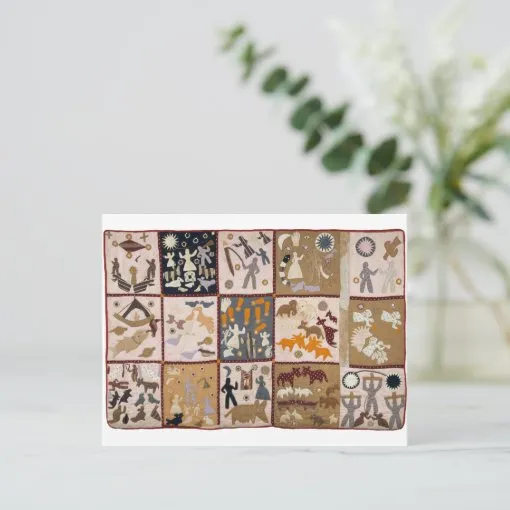 Photo: Harriet Powers, via rlv.zcache.com
By candlelight, she stitched together pieces of fabric into quilts that told stories—biblical tales, astronomical events, local legends, and personal memories woven into intricate patterns that would take her months to complete. For sixty years, from the 1880s until her death in 1910, Powers created textile masterpieces that no one recognized as art.
They were just quilts, after all. Bedding made by a Black woman who cleaned houses.
Stories Hidden in Plain Sight
Powers didn't just make quilts—she created visual narratives that preserved history in thread and fabric. Her most famous work, the "Pictorial Quilt," depicts fifteen different scenes: Adam and Eve in the Garden of Eden, Jonah and the whale, the Crucifixion, and local weather events that had become community legends.
Each square told a story with remarkable detail. Lions, serpents, human figures, and celestial bodies emerged from carefully cut and sewn fabric pieces. Powers used appliqué techniques that required extraordinary skill, creating three-dimensional effects that brought her narratives to life.
What made her quilts revolutionary wasn't just their artistic merit—it was how they preserved African American oral traditions in a permanent, visual form. At a time when literacy rates among formerly enslaved people remained low, Powers created a library of stories that could be read by anyone willing to look closely.
The Discovery That Changed Everything
In 1886, a white artist named Jennie Smith encountered one of Powers' quilts at a local fair. Smith was stunned by the sophisticated storytelling and technical mastery she witnessed. She tracked down Powers and convinced her to sell the quilt, recognizing its artistic significance even when the broader art world remained blind to such work.
That single transaction began a slow process of recognition that would take nearly a century to complete. Smith documented Powers' techniques and stories, creating the only written record of the artist's intentions and methods. Without Smith's intervention, Powers' work might have been lost forever—dismissed as folk craft rather than fine art.
When Craft Becomes Culture
The art establishment of Powers' era couldn't conceive that a Black domestic worker might create museum-worthy pieces. Quilting was women's work, domestic labor, practical craft—not art in the way that oil paintings or marble sculptures were art. The fact that Powers was Black and poor made recognition even more unlikely.
But Powers never created her quilts for museums or critics. She made them for her community, as teaching tools and memory keepers. Her biblical quilts helped illiterate congregation members follow Sunday sermons. Her historical quilts preserved local events that might otherwise be forgotten. Her astronomical quilts documented meteor showers and eclipses with scientific precision.
Each quilt served multiple purposes: bedding, education, entertainment, and spiritual guidance. Powers understood that art didn't need to hang on walls to change lives—sometimes the most powerful pieces were the ones people slept under.
The Smithsonian's Surprise
By the 1960s, as the civil rights movement forced America to reconsider whose contributions counted as culture, art historians began taking a second look at works they'd previously dismissed. Powers' quilts, preserved by the families who'd purchased them decades earlier, suddenly appeared in galleries and museums.
Today, her "Bible Quilt" hangs in the Smithsonian's National Museum of American History, recognized as one of the finest examples of 19th-century American folk art. Art historians study her techniques and symbolism with the same intensity once reserved for European masters. Her work influences contemporary artists and appears in textbooks alongside paintings and sculptures that once seemed infinitely more important.
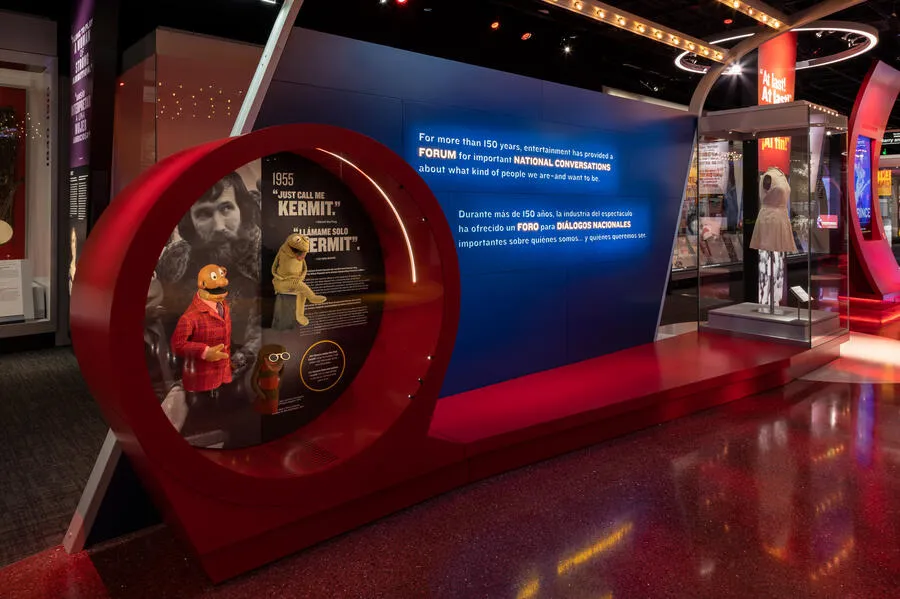 Photo: Smithsonian's National Museum of American History, via www.meyvaert.com
The Revolution Hidden in Every Stitch
Powers' story reveals how cultural gatekeepers decide what counts as art—and how those decisions often reflect power rather than merit. For generations, the art world dismissed work created by women, people of color, and those outside academic institutions. Quilts, pottery, woodcarving, and other "crafts" were considered inferior to painting and sculpture.
But Powers proved that artistic genius emerges from unexpected places and takes forms the establishment doesn't always recognize. Her quilts demonstrated that the most profound art often serves practical purposes, that beauty and utility can coexist, and that the most important stories sometimes hide in plain sight.
Threads That Bind Us
Harriet Powers spent her life making other people's homes beautiful while creating her own vision of beauty in the margins of her existence. She worked with scraps of fabric and stolen hours, transforming the humblest materials into works of enduring power.
Her legacy reminds us that art doesn't require permission or recognition to matter. Sometimes the most revolutionary act is simply continuing to create, trusting that truth and beauty will eventually find their audience. Powers stitched her way into immortality one thread at a time, proving that the hands that clean the world often possess the vision to transform it.