
The Library Was Her University
Every morning at 6 AM, Maria Santos unlocked the Riverside Public Library in Queens with a key she wasn't supposed to have. As the night janitor, she was only meant to clean. But in 1987, something about the computer terminal in the corner kept drawing her back.
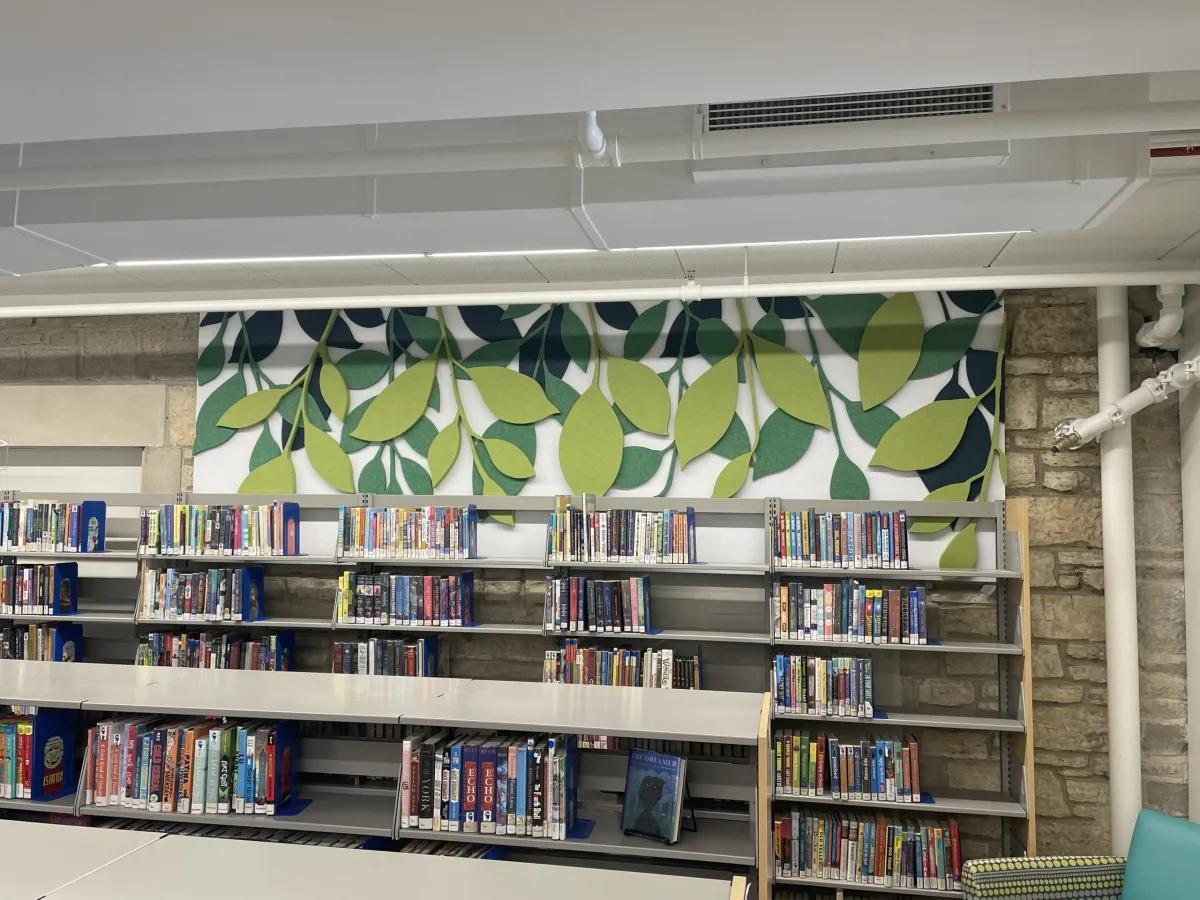 Photo: Riverside Public Library, via csicreativecom-media.s3.amazonaws.com
 Photo: Maria Santos, via okdiario.com
Santos had arrived from El Salvador three years earlier with a sixth-grade education and enough English to order coffee. She'd never seen a computer before, but watching the librarians type mysterious commands that made the machine respond felt like watching magic.
So she taught herself to read it.
When Programming Books Were Hieroglyphics
The first programming manual Santos borrowed might as well have been written in ancient Greek. She understood maybe one word in ten, but she copied every line of code by hand into a notebook, trying to figure out the patterns.
Her breakthrough came when she realized programming languages followed rules, just like Spanish and English. If she could memorize the vocabulary—words like "function" and "variable" and "loop"—she could start to understand the grammar.
Nights after cleaning, Santos would sit at the library computer and type in code from her notebook. Most of it didn't work. But when something finally ran correctly, when the computer did exactly what her commands told it to do, she felt the same thrill she'd felt learning her first English words.
The Mistake That Changed Everything
By 1991, Santos had taught herself three programming languages and was taking night classes at Queens Community College. She applied for an entry-level programming job at ConEd, New York's power company, but there was a problem: her resume listed her experience as "self-taught," which most hiring managers interpreted as "not qualified."
 Photo: Queens Community College, via dackconsulting.com
The interview was supposed to be a formality—a polite rejection. But the hiring manager, desperate to fill a position, gave Santos a simple programming test. She completed it in half the expected time and found two bugs in the existing code that the regular programmers had missed.
"Where did you learn to do this?" he asked.
"The library," Santos answered.
She got the job.
Building the Invisible Infrastructure
Santos spent the next fifteen years working on systems most people never think about: the software that manages power grids, tracks energy usage, and prevents blackouts. Her code wasn't flashy—no one would ever download an app she'd written or see her name on a startup's website.
But every time someone in New York turned on a light switch, Santos's code was part of what made the electricity flow.
Her specialty became system integration—connecting different computer networks so they could share information. It was painstaking, detail-oriented work that required understanding not just how to write code, but how to make different systems talk to each other.
Santos excelled because her experience learning languages had taught her something crucial: communication isn't just about speaking the same words, it's about understanding what the other side is trying to say.
The Network Nobody Knew About
In 2003, Santos led a project that connected New York's power grid to emergency management systems across the tri-state area. If there was ever a major outage, her network would automatically reroute power and coordinate recovery efforts.
The system was tested during the 2003 Northeast blackout. While much of the Eastern seaboard went dark, Santos's network helped restore power to critical facilities—hospitals, emergency services, water treatment plants—hours faster than would have been possible without her integration work.
No newspaper covered her contribution. There were no press releases about the immigrant janitor whose code helped keep New York running. Santos preferred it that way.
Teaching Herself Out of a Job
As Santos became more senior, she realized something troubling: most of the critical infrastructure code was written by people nearing retirement, and there weren't enough young programmers learning these "boring" systems. Banks, power companies, transportation networks—they all relied on software that few people understood how to maintain.
Santos started teaching evening classes at community colleges, sharing her self-taught methods with new immigrants and career-changers. Her approach was different from traditional computer science education: she focused on pattern recognition and practical problem-solving rather than theory.
"Programming is like learning any language," she would tell her students. "You start with simple sentences and work your way up to poetry."
The Code That Outlasts the Coder
Today, Santos is 67 and officially retired, but her code is still running. The power grid integration system she built has been updated and expanded, but its core architecture remains her design. Every day, millions of people in the New York metropolitan area depend on systems that trace back to a woman who taught herself programming in a public library.
Her story challenges everything we assume about who gets to shape the digital world. She never attended MIT or Stanford. She never worked for Google or Facebook. She never raised venture capital or gave a TED talk.
But she built part of the invisible infrastructure that makes modern life possible. Her code doesn't have her name on it, but it has her fingerprints: careful, methodical, designed to work reliably even when no one's watching.
The Lesson Hidden in Plain Sight
Santos's story isn't just about programming—it's about the difference between learning and credentialing. While others debated whether immigrants could assimilate into American technological society, Santos was quietly becoming part of its foundation.
She proved that expertise doesn't always come from classrooms, that innovation doesn't always happen in Silicon Valley, and that some of the most important work gets done by people whose names we'll never know.
In a world obsessed with disruption and breakthrough technologies, Santos represents something equally valuable: the steady, unglamorous work of keeping things running. Her legacy isn't a billion-dollar IPO or a revolutionary app—it's the lights that turn on when you flip the switch, powered by code written by a woman who refused to let language barriers limit her possibilities.