The Coffee Girl Who Cracked the Code: How a Waitress Fixed What Engineers Couldn't
The Problem Nobody Else Could See
Betty Martinez had poured exactly 47,000 cups of coffee when she finally snapped. It wasn't the rude customers or the double shifts that broke her—it was watching the same damn coffee urn malfunction for the eight-hundredth time, knowing exactly why it kept breaking, and realizing that nobody with the power to fix it actually understood the problem.
 Photo: Betty Martinez, via static.public.fr
It was 1956, and Martinez was working the morning shift at Mel's Diner on Route 66 outside Flagstaff, Arizona. The diner served truckers, traveling salesmen, and engineers from the nearby electronics plant. Martinez had been watching these men—always men—complain about equipment failures for years while she quietly kept the coffee flowing despite machinery that seemed designed to make her job impossible.
 Photo: Flagstaff, Arizona, via cdn.wmnf.org
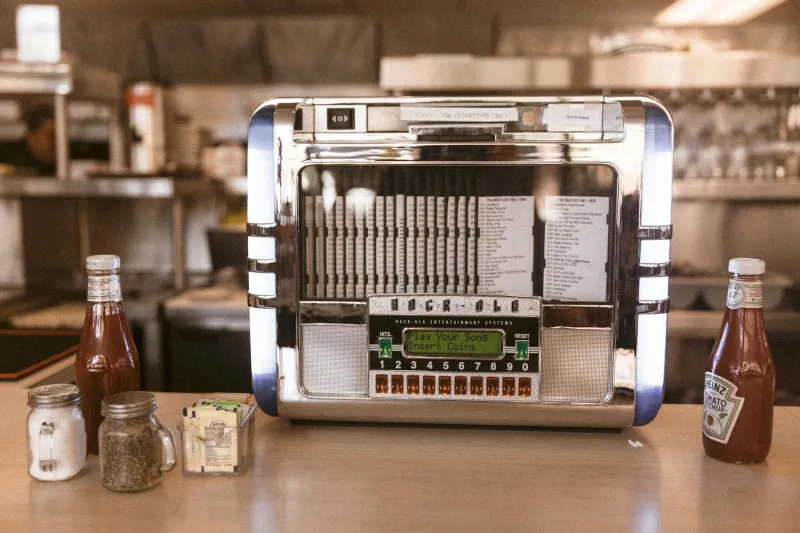
 Photo: Mel's Diner, via 1.bp.blogspot.com
The coffee urn was the worst offender. Every morning, the pressure valve would stick, causing scalding water to spray unpredictably. The manufacturer had sent repair technicians three times, but they'd only addressed symptoms, not the root cause. Martinez knew why it kept failing because she used the machine eight hours a day. The engineers who designed it had clearly never worked a breakfast rush.
The Education of Proximity
Martinez's technical education happened entirely by accident. Born in a mining town in southern Arizona, she'd learned to fix things out of necessity—when your father works underground and your mother takes in laundry, you either learn to repair what breaks or do without.
At Mel's Diner, she inadvertently became an expert in commercial kitchen equipment through sheer repetition. She knew exactly how much pressure the coffee urn could handle before the valve stuck. She understood which combinations of temperature and humidity made the problem worse. Most importantly, she could predict when failures would happen, often warning the morning cook to have backup coffee ready.
What Martinez possessed was something engineering schools couldn't teach: intimate knowledge of how equipment actually behaved under real-world conditions. While the urn's designers had tested it in controlled laboratory settings, Martinez had observed its performance through thousands of hours of actual use, in conditions ranging from packed breakfast rushes to quiet midnight shifts.
The Sketch That Started Everything
The breakthrough came during a particularly frustrating morning in March 1957. The coffee urn had failed twice before 8 AM, leaving Martinez to explain to angry customers why there was no coffee during the breakfast rush. During her break, she grabbed a napkin and started sketching.
Her drawing was simple: a modified pressure valve with a secondary release mechanism that would prevent the dangerous spray while maintaining consistent pressure. The design wasn't revolutionary—it was just logical. Martinez had observed the failure pattern so many times that the solution seemed obvious.
What made her sketch remarkable wasn't its complexity but its practicality. Martinez understood exactly where the current design failed because she'd experienced every failure mode personally. Her modification addressed the real problem, not the theoretical one.
She showed her sketch to Jake, the diner's cook, who had worked in commercial kitchens for twenty years. "This would work," he said immediately. "Why hasn't anybody thought of this?"
The answer was simple: the people who designed coffee urns didn't pour coffee for a living.
Building the Prototype
Martinez spent her next three paychecks on materials and machine shop time, working with a local mechanic to build a prototype valve based on her napkin sketch. The process took six months of trial and error, with Martinez testing each iteration during slow periods at the diner.
Her biggest challenge wasn't technical—it was convincing people to take her seriously. The machine shop owner initially refused to work with her, assuming she didn't understand what she was asking for. It took Jake's endorsement and Martinez's detailed explanation of pressure dynamics to convince him she knew what she was doing.
The prototype worked perfectly. Martinez's modified valve eliminated the dangerous spray while actually improving the urn's performance. Coffee stayed hotter, pressure remained consistent, and the mechanism required less maintenance than the original design.
More importantly, her modification was cheap to manufacture and could be retrofitted to existing equipment. Martinez had solved an industry-wide problem using parts that cost less than five dollars.
The Patent That Almost Wasn't
Filing a patent in 1957 as a Hispanic waitress in Arizona required more courage than engineering skill. Martinez borrowed money for the application fees and found a lawyer willing to work with her—not because he believed in her invention, but because he was curious about her story.
The patent process revealed how unusual Martinez's situation was. Patent examiners were accustomed to applications from corporations or university researchers, not diner employees. Her application was initially rejected, not for technical reasons but because examiners couldn't believe a waitress had developed a legitimate engineering solution.
Martinez's lawyer suggested she list her occupation as "equipment consultant" rather than "waitress" on revised applications. Martinez refused. "I'm a waitress," she told him. "That's why I know how this stuff really works."
The patent was finally approved in 1959, with Martinez listed as inventor and her occupation accurately described as "restaurant worker."
The Industry That Came Calling
Word of Martinez's valve modification spread through the restaurant equipment industry faster than she expected. Manufacturers who had ignored the spray problem for years suddenly wanted to license her design. The same companies that had dismissed her complaints as a waitress now competed to buy her patent.
Martinez negotiated licensing deals with three major manufacturers, earning royalties that eventually exceeded her diner wages by a factor of ten. But she kept working at Mel's for two more years, partly out of loyalty and partly because she enjoyed the work.
Her valve design became standard in commercial coffee equipment throughout the 1960s. Modifications based on her original patent are still used in modern coffee urns, though few people know the innovation came from someone who served coffee rather than designed it.
The Invention That Kept on Giving
Martinez's success with the coffee urn valve opened her eyes to other problems that engineers had overlooked. Over the next decade, she developed modifications for griddle temperature controls, dishwasher spray mechanisms, and refrigeration units—all based on problems she observed during her restaurant work.
She eventually left waitressing to work as a consultant for restaurant equipment manufacturers, helping them understand how their products actually performed in real-world conditions. Her insights led to dozens of incremental improvements that made commercial kitchens safer and more efficient.
Martinez's consulting work revealed a systematic problem in product development: engineers designed equipment in isolation from the people who used it daily. Her value wasn't just in solving specific problems but in bridging the gap between design theory and operational reality.
The Lesson in the Coffee Grounds
Betty Martinez's story illustrates something profound about innovation: proximity to problems often matters more than formal training in solving them. While engineers understood the theoretical principles behind pressure valves, Martinez understood how those principles played out through thousands of real-world interactions.
Her success wasn't just about mechanical aptitude—it was about the credibility that comes from living with a problem daily. Martinez knew exactly where the current design failed because she'd experienced every failure personally. Her solutions worked because they addressed real problems, not theoretical ones.
More importantly, Martinez's story reveals how much innovation potential exists in overlooked places. Every industry has people like Martinez—workers who understand operational realities that designers never see. The question isn't whether these insights exist, but whether anyone with power to act is listening.
Today, Martinez's original valve patent hangs in the Smithsonian's collection of American industrial innovation, right next to patents from Bell Labs and General Electric. It's a reminder that some of the best engineering happens not in laboratories but in the places where people actually use what engineers build.
The waitress who fixed what engineers couldn't proved that expertise doesn't always come with credentials. Sometimes it comes with a coffee pot, a napkin, and the audacity to believe that the person who lives with the problem might know how to solve it.