Gold in the Garbage: Five Entrepreneurs Who Got Rich Off What the World Threw Away
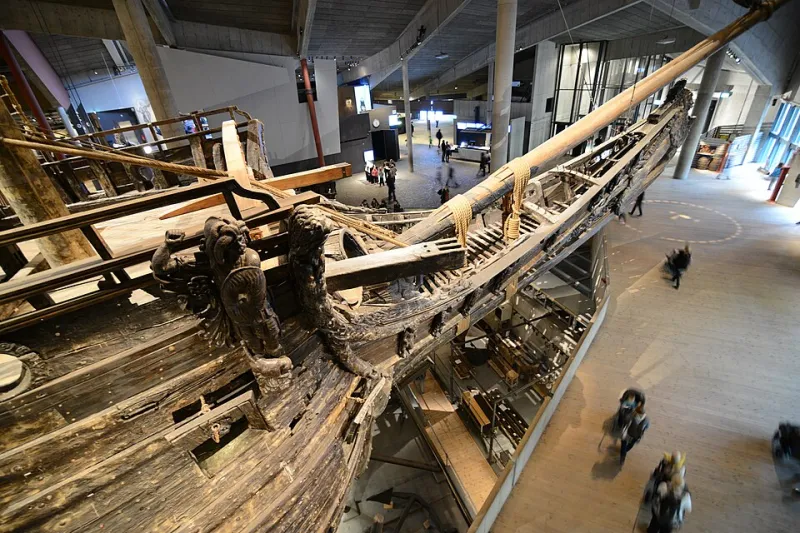
Photo: Jorge Láscar from Melbourne, Australia, CC BY 2.0, via Wikimedia Commons
The Most Valuable Thing in the Room Is Usually the One Nobody Wants
Every great business story has a moment of insight at its center. Sometimes that moment happens in a boardroom. Sometimes it happens in a lab. And sometimes — more often than the business schools would like to admit — it happens at a junkyard, a landfill, or a dusty county records office where nobody has been in years.
The five people below didn't build their fortunes by finding something new. They built them by looking at something discarded and asking a question everyone else had stopped asking: what is this actually worth?
1. The Scrap Dealer Who Saw Steel Where Others Saw Rubble
When the steel mills of western Pennsylvania started closing in the early 1980s, the conventional wisdom was clear: the industry was dying, and anyone still attached to it was going down with the ship. Entire towns accepted that verdict. The equipment was sold off. The buildings sat empty.
One man didn't accept it. A scrap dealer working out of a pickup truck and a rented storage lot, he started buying decommissioned mill equipment for pennies on the dollar — not to resell the parts, but to disassemble them and sell the raw materials to emerging manufacturers who needed quality steel at a price the big producers couldn't match.
Within a decade, he had built a regional recycling operation that employed hundreds of workers in communities that had been told their economic story was over. The mills were gone, but the material they left behind had a second life — and he had seen it coming when everyone else was looking the other way.
The lesson he cited most often in later interviews: The people closest to an industry are usually the last ones to see what's still valuable in it.
2. The Patent Hunter Who Built a Pharmaceutical Empire From Expired IP
Patents expire. That's the deal — a temporary monopoly in exchange for public disclosure, and then the knowledge becomes fair game. Most pharmaceutical companies treat expired patents as irrelevant. One woman treated them as inventory.
Working from a home office in the early 1990s with a subscription to a legal database and a background in chemistry, she spent years cataloging compounds that had been patented, developed to a point, and then abandoned — usually because the original company had pivoted, merged, or simply lost interest. The compounds themselves were often genuinely promising. They just hadn't had a champion.
She licensed several of them, found manufacturing partners willing to work on thin margins, and brought generic versions to market at price points that made the treatments accessible to patients who had previously gone without. The business she built didn't invent anything. It rescued things that had been left to expire — and in doing so, created real value for patients and a very healthy return for herself.
3. The Railroad Salvager Who Turned Abandoned Tracks Into Real Estate Gold
By the mid-twentieth century, thousands of miles of American railroad track had been decommissioned. The rail companies had written them off. Local governments didn't know what to do with them. The land sat there, long and narrow and seemingly useless, cutting through backyards and empty fields.
A real estate investor from the Midwest saw something else. He recognized that those abandoned corridors — already cleared, already graded, already running through the hearts of communities — were essentially free infrastructure. He spent years negotiating with municipalities and rail companies to acquire the rights to dozens of these corridors, often for nominal sums, and then worked with local governments to convert them into trails, utility easements, and eventually, in several cases, transit corridors for newly developed communities.
The value he unlocked wasn't in the land itself. It was in the connectivity — the fact that these strips of forgotten ground linked places that developers then wanted to build around. He didn't create the infrastructure. He recognized it when everyone else had given up on it.
4. The Textile Recycler Who Made Fashion's Waste Into a Fortune
The American fashion industry generates an almost incomprehensible volume of unsold and returned merchandise every year. For most of the twentieth century, the standard solution was disposal — landfill or incineration. One entrepreneur, working out of a warehouse in New Jersey in the late 1970s, decided there was a better answer.
 Photo: New Jersey, via www.vidiani.com
She built a network of buyers, sorters, and resellers that transformed unwanted clothing into a supply chain. Garments that were too worn for resale were shredded into industrial rags or insulation material. Those that were intact went to secondary markets — some domestic, many international — where they found buyers who valued them at prices far above zero.
What started as a single warehouse grew into a multi-state operation that processed millions of pounds of textile waste annually. She didn't romanticize what she was doing. She saw a supply problem, a demand problem, and a gap between them that nobody was filling. The environmental benefit was real, but she was clear-eyed: she was in it because the margins were there if you were willing to do the unglamorous work.
5. The Data Archivist Who Monetized Records Nobody Thought to Keep
Before the internet made information feel infinite, there were rooms full of paper. County courthouses. Hospital archives. Agricultural extension offices. Decades of records, carefully maintained and almost completely inaccessible to anyone without the time and inclination to drive out and dig through them.
A former librarian turned entrepreneur recognized in the early 1990s that this inaccessible information had enormous latent value — to genealogists, to lawyers, to insurance companies, to anyone trying to establish historical facts. He built a business around digitizing and indexing these records, negotiating access agreements with local governments that were happy to have someone else handle the storage problem.
By the time the internet made his platform genuinely useful to a mass audience, he had years of indexed data that nobody else had thought to collect. The records had been there all along. He was simply the first person who decided they were worth keeping.
The Pattern Underneath the Pattern
Five different industries. Five different decades. Five very different people. But the same underlying move: look at what everyone else has written off, and ask whether the consensus is actually right.
It usually isn't. The world discards things for all kinds of reasons — inconvenience, short-term thinking, a change in fashion, the simple fact that nobody currently powerful has a stake in preserving them. That doesn't make the discarded thing worthless. It just means the person who picks it up gets a head start.
The odds, in each of these cases, looked terrible at the start. That's kind of the point.