From Broken English to Billion-Dollar Empires: Five Immigrants Who Turned Their Outsider Status Into America's Biggest Advantage
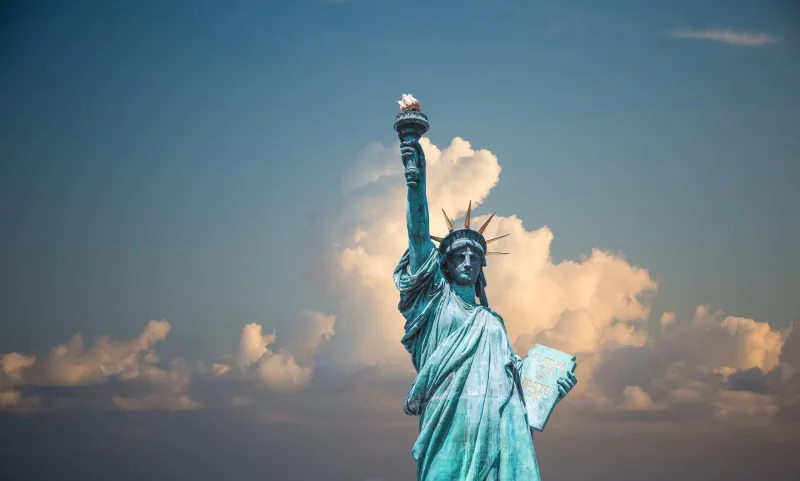
When Not Knowing the Rules Becomes Your Secret Weapon
There's something powerful about arriving in a new country with nothing to lose and everything to prove. While native-born entrepreneurs often see obstacles, immigrants see opportunities that others have stopped noticing. They ask "why not?" in places where everyone else has learned to say "that's just how it's done."
Here are five immigrants who turned their outsider perspective into empires that changed American business forever.
1. Estée Lauder: The Polish Immigrant Who Refused to Take No for an Answer
Josephine Esther Mentzer arrived from Austria-Hungary in 1908, part of a wave of Eastern European immigrants who settled in Queens. Her family ran a hardware store, but Estée was fascinated by her uncle's homemade beauty creams. While American cosmetics companies focused on selling through department stores to wealthy women, Estée had a different idea.
 Photo: Estée Lauder, via www.esteelauder.com
She started by giving away free samples on the subway and in hotel lobbies, personally applying makeup on any woman who'd let her. Department store executives thought she was crazy — giving away product for free? Approaching random women on the street? It wasn't how business was done.
But Estée understood something that established companies had forgotten: women wanted to try before they bought, and they trusted recommendations from other women more than advertisements. Her "gift with purchase" strategy and hands-on demonstrations became the foundation of modern cosmetics marketing.
By the time Estée Lauder went public in 1995, it was worth $4 billion. The woman who couldn't afford department store makeup had created one of the world's most prestigious beauty brands by refusing to follow the industry's unwritten rules.
2. An Wang: From Chinese Refugee to Computing Pioneer
When An Wang fled China in 1945, he spoke almost no English and had $40 in his pocket. He enrolled at Harvard to study physics, supporting himself by washing dishes and tutoring other students in mathematics.
 Photo: An Wang, via images.mubicdn.net
In the 1950s, while IBM and other established companies were building room-sized computers for corporations, Wang noticed something they'd missed: offices were drowning in paperwork, and secretaries spent hours retyping documents with minor changes.
Wang Computer became the first company to focus on word processing for ordinary office workers. While competitors built machines for engineers and scientists, Wang designed computers that secretaries could actually use. His machines had dedicated keys for common tasks and screens that showed exactly what would print — revolutionary concepts that seem obvious now.
At its peak in the 1980s, Wang Laboratories employed 33,000 people and generated $3 billion in revenue. The refugee who couldn't speak English had created the tools that would transform how America worked with words.
3. Levi Strauss: The Bavarian Tailor Who Dressed the Wild West
Levi Strauss left Bavaria for New York in 1847, planning to join his brothers' dry goods business. But when gold was discovered in California, he saw an opportunity that established East Coast merchants missed entirely.
While other suppliers rushed west with shovels and pans, Levi brought canvas and denim. He'd noticed that miners' biggest problem wasn't finding gold — it was that their pants kept falling apart. The heavy work destroyed cotton trousers in weeks.
Working with a Nevada tailor named Jacob Davis, Levi created the first riveted work pants. The metal reinforcements at stress points meant pants that could survive months of hard labor. It was a simple innovation that solved a real problem, but established clothing manufacturers had been too focused on fashion to notice.
Levi Strauss & Co. became the uniform of American workers, from cowboys to construction crews. The immigrant who started by selling canvas to miners had created the most iconic piece of American clothing.
4. Sergey Brin: The Soviet Kid Who Organized the World's Information
Sergey Brin's family fled the Soviet Union in 1979 when he was six years old, escaping the anti-Semitism that limited his father's career as a mathematician. They settled in Maryland with little money and less English.
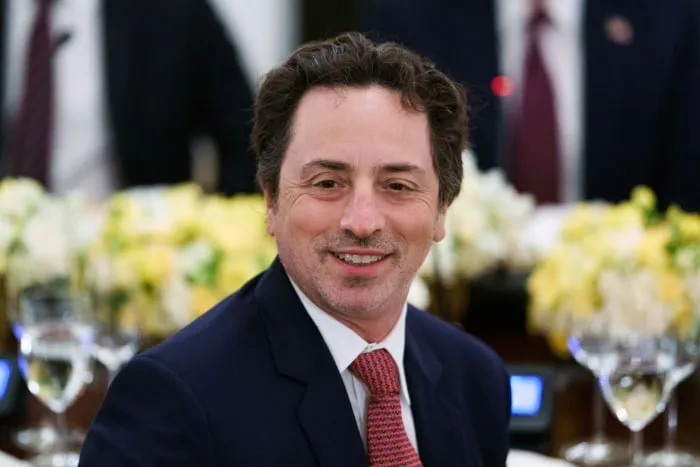 Photo: Sergey Brin, via images.wsj.net
In the 1990s, while working on his PhD at Stanford, Brin noticed that the internet was becoming impossible to navigate. Existing search engines ranked results by how many times they mentioned your search terms — a system that was easily gamed by spammers and produced terrible results.
Brin and his roommate Larry Page developed a different approach: instead of counting keywords, they analyzed which sites other sites linked to. It was like asking the internet itself which pages were worth reading. They called it PageRank, and it became the foundation of Google.
Established tech companies like Yahoo and AltaVista dismissed search as a solved problem. But Brin saw it with fresh eyes — as an immigrant who'd grown up in a society where information was controlled and hidden, he understood the revolutionary power of making all knowledge freely accessible.
Google is now worth over $1 trillion, and the refugee who arrived speaking no English helped organize the world's information.
5. Indra Nooyi: The Chennai Engineer Who Redesigned American Snacking
When Indra Nooyi arrived from India in 1978 to attend Yale Business School, she worked the midnight shift at a reception desk to pay for her education. Her thick accent and unfamiliarity with American corporate culture made networking nearly impossible.
But when she joined PepsiCo in 1994, Nooyi brought a perspective that American executives had missed: the world was changing, and so were consumers. While competitors focused on traditional soda and chips, she pushed PepsiCo toward healthier options and international expansion.
Nooyi championed the acquisition of Tropicana and Quaker Oats, diversifying PepsiCo beyond sugary drinks. She also expanded aggressively into emerging markets, understanding better than most American executives how global tastes were evolving.
Under her leadership as CEO from 2006 to 2018, PepsiCo's revenues grew from $35 billion to $63 billion. The immigrant who worked midnight shifts had transformed one of America's most iconic companies by seeing opportunities that insiders had stopped noticing.
The Advantage of Not Belonging
What connected all five of these immigrants wasn't just their willingness to work hard — it was their ability to see American markets with fresh eyes. They noticed problems that natives had learned to accept, and they questioned assumptions that established companies treated as gospel.
Estée Lauder saw that women wanted to try makeup before buying it. An Wang noticed that offices needed computers that regular people could use. Levi Strauss realized that workers needed clothes that could survive real work. Sergey Brin understood that search was about quality, not quantity. Indra Nooyi recognized that American tastes were becoming global.
None of these insights required advanced degrees or insider connections. They just required the willingness to ask "why does it have to be this way?" — a question that comes naturally when you're not already invested in how things are.
In a country built by immigrants, the outsider's perspective isn't a disadvantage to overcome. It's often the secret ingredient that turns a suitcase and an accent into an American empire.