When Darkness Became Music: The Sharecropper's Son Who Gave America Its Soul
When Darkness Became Music: The Sharecropper's Son Who Gave America Its Soul
The first time Ray Charles Robinson touched piano keys, he was seven years old and already going blind. By the time he turned eight, the world had gone completely dark. Most people would have called it tragic. Ray called it the beginning.
Growing up in the brutal poverty of 1930s Florida, where sharecropping families like his scratched out survival from unforgiving soil, blindness should have been the end of any big dreams. Instead, it became the foundation of something revolutionary.
The Sound of Survival
While other kids played in the dirt roads of Greenville, Ray sat at a beaten-up piano in the local café, his fingers finding melodies that seemed to come from somewhere deeper than memory. His mother, Aretha, cleaned houses for white families and refused to let anyone treat her son like he was broken.
"Don't you go feeling sorry for yourself," she'd tell him, words that would echo through every performance for the rest of his life. "You got everything you need right here," she'd say, tapping his chest.
When Aretha died suddenly when Ray was 15, he found himself completely alone. No family, no money, no prospects. Just a blind Black teenager in the Jim Crow South with nothing but an old piano and a voice that seemed to carry the weight of every hard morning his people had ever lived through.
Most stories like this end with tragedy. This one was just getting started.
The Road That Led Everywhere
Ray hit the road with his fingers and his voice as his only currency. He played honky-tonks where the smoke was thick and the crowds were rough. He slept in boarding houses where the beds had more springs than comfort. He performed for audiences who saw a blind musician and expected either pity or novelty.
What they got instead was something they'd never heard before.
Ray wasn't just playing music — he was translating pain into something beautiful. Every note carried the weight of cotton fields and broken promises, but also the unshakeable belief that tomorrow might sound different than today.
His blindness, the thing everyone assumed would limit him, became his greatest advantage. While other musicians watched the crowd for reactions, Ray listened with an intensity that was almost supernatural. He could hear when a room was about to turn, when a song was hitting hearts instead of just ears.
Breaking Every Rule That Mattered
By the 1950s, Ray was doing something that made both the gospel world and the blues world uncomfortable: he was mixing them together. Sacred and secular, Sunday morning and Saturday night, all flowing together like they'd always belonged in the same song.
Church folks called it blasphemy. Blues purists called it sellout. Ray called it honest.
When he recorded "I Got a Woman" in 1954, taking a gospel melody and filling it with earthly desire, he wasn't just making music — he was creating a new language for American emotion. The song that would later be called the birth of soul music came from a blind man who saw connections nobody else could imagine.
Record executives didn't know how to market it. Radio stations didn't know which format to play it on. Audiences didn't care about any of that. They just knew it made them feel something real.
The Voice of a Generation
What Ray understood, maybe because he'd never been able to rely on sight, was that music wasn't about what you could see — it was about what you could make other people feel. Every performance was a conversation between his darkness and the audience's light, and somehow in that exchange, something magical happened.
His version of "Georgia On My Mind" didn't just become a hit — it became the official state song of Georgia. A blind Black man from Florida had given the Deep South a song about itself that felt more true than anything they'd heard before.
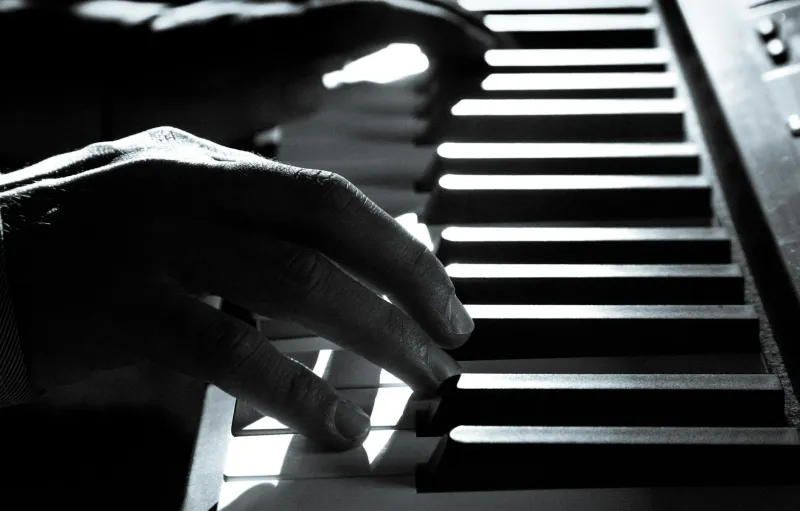
When he sat down at that piano, shoulders hunched over the keys like he was protecting a secret, Ray wasn't performing music. He was channeling it. Every note seemed to come from a place deeper than training, deeper than technique, deeper than anything you could learn in a conservatory.
The Genius Nobody Expected
By the time the world started calling him "The Genius," Ray had already proven that the most revolutionary art often comes from the most unlikely places. A blind sharecropper's son had taught America how to feel its own emotions, had shown that gospel and blues weren't opposites but different verses in the same song.
His success wasn't despite his blindness — it was because of how that blindness had sharpened every other sense, had forced him to listen to music in ways that sighted musicians never could.
Ray Charles Robinson, who started with nothing but darkness and a determination not to let that darkness win, had become the voice of American soul. He'd taken every disadvantage the world had handed him and turned them into the very things that made him irreplaceable.
Sometimes the best view comes from not seeing at all.