The Night Shift Dreamer Who Doodled His Way to Engineering History
The Problem Nobody Could Solve
By 1987, the Tacoma Harbor Bridge project had become engineering's white whale. Three major firms had thrown in the towel. The geography was brutal — a 2,000-foot span across choppy waters with soil conditions that laughed at conventional foundation techniques. Wind shear patterns that had claimed the original Tacoma Narrows Bridge in 1940 still haunted the site.
The Washington State Department of Transportation was ready to shelve the project indefinitely. That's when a manila envelope arrived in the mail with no return address, containing hand-drawn sketches on diner napkins and the back of cleaning supply invoices.
The Man Behind the Mop
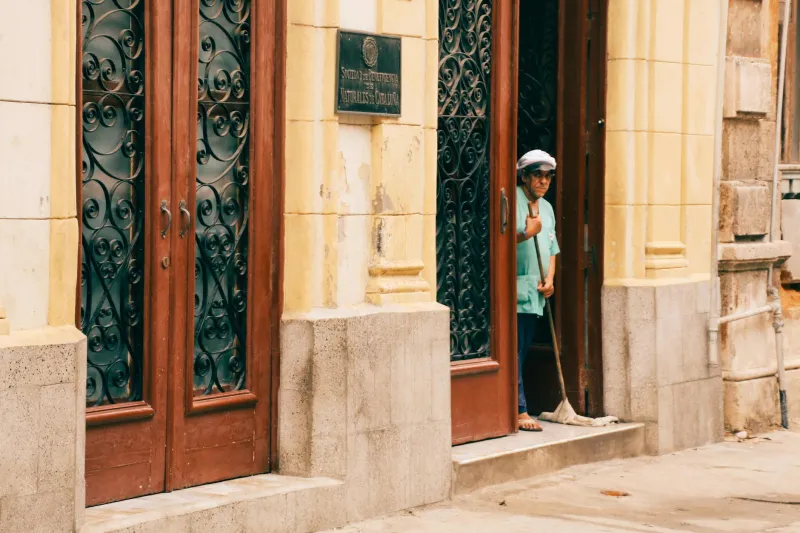
Robert "Bobby" Chen had been pushing a mop bucket through the Seattle Public Library for eight years. Born in Taiwan, he'd immigrated to the U.S. at nineteen with a head full of dreams and exactly $47 in his pocket. Engineering school? Not happening on a janitor's salary while supporting his aging mother.
But Bobby had a secret. Every night after his shift ended at 6 AM, while the city slept, he'd camp out in the library's engineering section. He taught himself calculus from discarded textbooks. He memorized stress tables and load calculations. He studied every bridge failure in recorded history, obsessing over what went wrong and why.
"I had nothing to lose," Bobby would later reflect. "Real engineers, they have reputations to protect, careers to think about. Me? I was already invisible."
Napkin Engineering
The Tacoma project consumed Bobby's imagination. During his lunch breaks at Denny's, he'd sketch solutions on napkins, working through problems that had stumped teams of PhD engineers. His approach was radically different — instead of fighting the challenging conditions, he designed around them.
Where others saw impossible soil conditions, Bobby saw an opportunity for a revolutionary foundation system. Instead of trying to anchor deep into unstable ground, his design distributed weight across a series of interconnected floating platforms. The bridge would literally ride the geological instability like a ship on waves.
His wind-resistance solution was even more unconventional. Rather than the typical aerodynamic approach, Bobby's design incorporated controlled turbulence zones that would actually stabilize the structure during high winds — turning the area's notorious gusts into an asset rather than a liability.
The Envelope That Changed Everything
When Bobby finally worked up the courage to mail his sketches to the DOT, he expected nothing. What he got was a phone call that would change his life.
"We need you to come in immediately," the voice said. "And bring any other drawings you have."
The engineering review committee was stunned. Here was a solution that was both elegant and practical, addressing every major challenge the project faced. More importantly, preliminary calculations suggested it would work.
"It was like seeing the problem through completely fresh eyes," remembers Dr. Sarah Martinez, the project's lead structural engineer. "He wasn't constrained by what we all 'knew' was impossible."
Building the Unbuildable
The DOT hired Bobby as a consultant — his first engineering job. The construction process proved his unconventional thinking was sound. The floating foundation system performed flawlessly during installation, and early wind tests exceeded all expectations.
The bridge opened in 1991, two years ahead of schedule and $50 million under budget. It's still standing today, having weathered storms that would have challenged conventional designs.
Bobby used his consulting fees to finally attend engineering school — at age 35. He graduated summa cum laude and went on to design bridges across three continents.
The Advantage of Starting from Zero
Bobby's story illuminates something powerful about innovation: sometimes the biggest breakthroughs come from the people with the least to lose. While established engineers were trapped by conventional wisdom and career concerns, a janitor with napkins and determination saw possibilities they couldn't.
"I didn't know what was supposed to be impossible," Bobby says. "So I just focused on what needed to work."
Today, the "Chen Method" of adaptive foundation design is taught in engineering schools worldwide. The bridge that everyone said couldn't stand has become a model for construction in challenging environments.
The Napkin That Started It All
Bobby still keeps the original Denny's napkin in his office — now framed next to his engineering degree and the Presidential Medal for Engineering Excellence he received in 2010. It's a reminder that the most extraordinary solutions often come from the most ordinary moments.
Sometimes the person with the mop sees what the person with the PhD misses. Sometimes the night shift is exactly where the next breakthrough is waiting to be born.
And sometimes, the most important blueprints start as doodles on napkins, sketched by someone the world never expected to notice.