Billion-Dollar Beginnings: 5 Empires That Started in the Most Unglamorous Places Imaginable
Billion-Dollar Beginnings: 5 Empires That Started in the Most Unglamorous Places Imaginable
There's a particular mythology around startup origins in America. The garage. The dorm room. The kitchen table. We've heard these stories so many times that they've started to feel like a genre rather than a reality — a reassuring narrative we tell ourselves about meritocracy and grit.
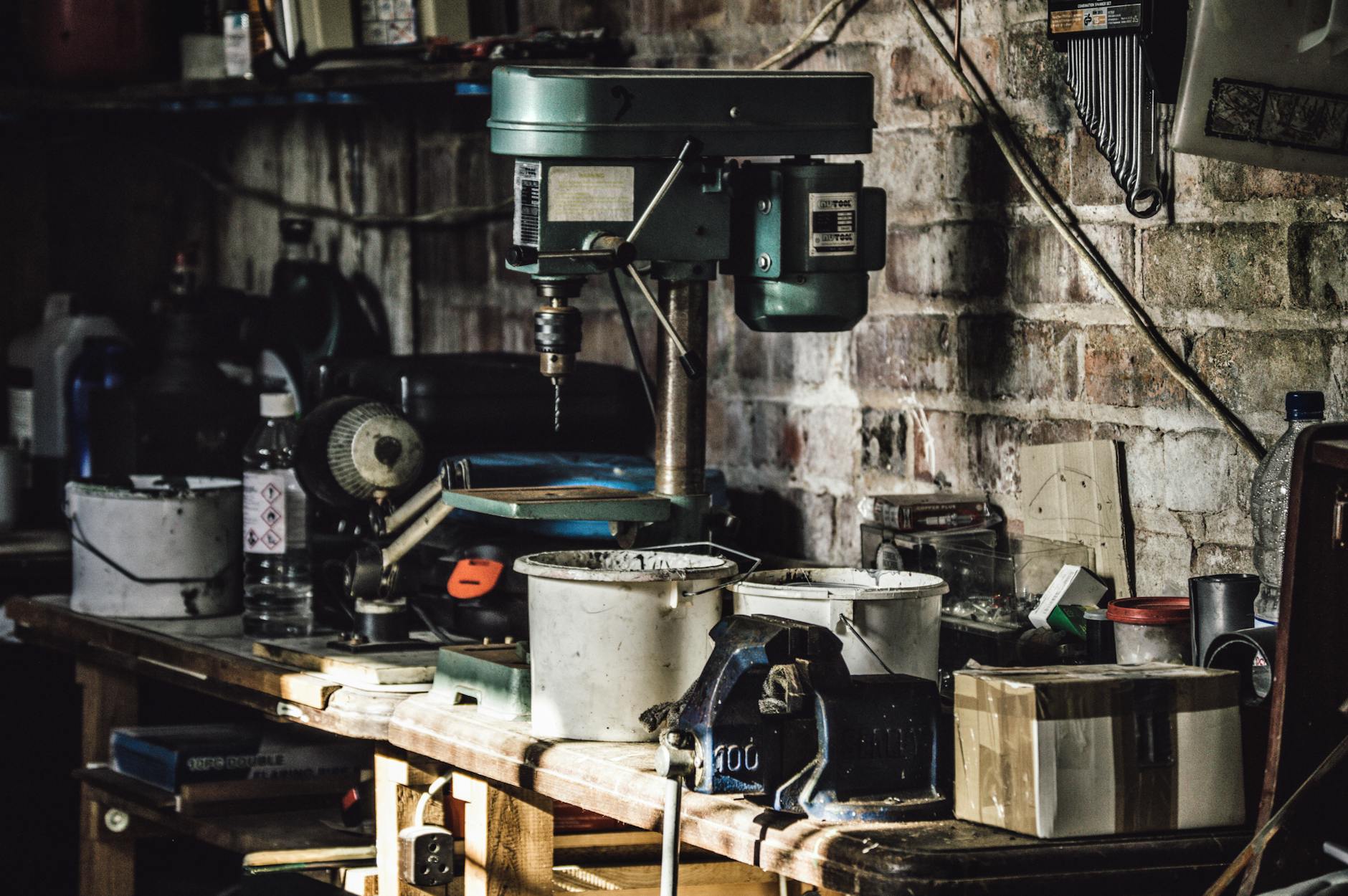
But here's the thing: the mythology exists because the reality actually happened. Repeatedly. Across industries and decades, some of the most consequential businesses in the world were born in spaces that no sane investor would have walked into voluntarily. What follows are five of those stories — some familiar, some genuinely obscure — and what they share beyond the cramped square footage.
1. Mattel — A Garage Full of Picture Frame Scraps (Hawthorne, California, 1945)
Most people know Mattel as the company that makes Barbie. Far fewer know that it started as a picture frame business run out of a garage in Hawthorne, California, by a man named Harold Matson and his business partner Elliot Handler. The name itself is a mashup: Mattson + Elliot.
Matson and Handler were making frames, but Handler kept getting distracted. He was using the leftover scraps of wood and plastic from the frame business to build dollhouse furniture on the side, and his wife Ruth was quietly selling the miniature pieces to local stores. The furniture sold better than the frames. Handler pivoted. Matson, less convinced, eventually sold his share of the business back to the Handlers and walked away.
Ruth Handler, watching her daughter play with paper dolls and imagining grown-up futures for them, had a different idea entirely. In 1959, Mattel introduced Barbie — named after the Handlers' daughter Barbara. The company that had started with leftover picture frame wood became one of the most recognizable toy brands on the planet. The garage is gone. The idea it produced is still everywhere.
2. Harley-Davidson — A 10-by-15-Foot Shed (Milwaukee, Wisconsin, 1901)
The shed in question had the word "motor factory" written on the door in chalk. It measured ten feet by fifteen feet. Inside it, 21-year-old William Harley and his friend Arthur Davidson were trying to attach a small engine to a bicycle frame, working by hand with tools that were barely adequate for the job.
Their first engine wasn't powerful enough to climb Milwaukee's hills without the rider pedaling to help. They scrapped it and started over. The second version worked better. By 1903, they had built their first proper motorcycle. By 1905, they were selling bikes to police departments. By 1920, Harley-Davidson was the largest motorcycle manufacturer in the world, with dealers in 67 countries.
The chalked words on that shed door — "motor factory" — weren't a joke or an ironic statement. They were a declaration of intent from two young men who couldn't yet afford a real sign. Sometimes the most important thing about a beginning is the audacity of how you describe it.
3. Yankee Candle — A Teenager's Christmas Present (South Deerfield, Massachusetts, 1969)
This one starts with a 16-year-old named Michael Kittredge who couldn't afford a Christmas gift for his mother. So he melted down some crayons, poured the wax into a milk carton mold, and made her a candle.
A neighbor saw it and offered to buy one. Kittredge made another. Then another. He was soon melting crayons in his parents' South Deerfield home so frequently that the operation had taken over the basement. Within a few years, the business had outgrown the house entirely. By the time Kittredge sold Yankee Candle in 1998, it was generating over $300 million in annual revenue. In 2013, it sold again for $1.75 billion.
The whole thing started because a teenager was broke at Christmas and didn't want to show up empty-handed. There is no version of that story that a business school would have greenlit. There is also no version of that story that isn't completely, wonderfully American.
4. Crayola — A Barn and a Very Specific Problem (Easton, Pennsylvania, 1885)
Before Crayola was synonymous with childhood, it was a business called Binney & Smith, run by cousins Joseph Binney and C. Harold Smith out of a barn in the Lehigh Valley of Pennsylvania. They were making industrial products — carbon black for car tires, red oxide pigment for painting barns. Practical, unglamorous, and profitable enough to keep the lights on.
The pivot came when the cousins started paying attention to a complaint from teachers across the country: the chalk available for classroom use was expensive, brittle, and dusty. Binney & Smith began producing a better, cheaper chalk. Then someone in the company — likely Alice Stead Binney, wife of Edwin Binney who had taken over from the founders — noticed that the wax crayons available for children were imported from Europe, expensive, and made with toxic pigments.
In 1903, Binney & Smith introduced the first box of Crayola crayons: eight colors, five cents a box. The name came from the French word for chalk (craie) and the word oleaginous, meaning oily. A barn-based industrial pigment company had, almost by accident, invented one of the most iconic childhood objects in American history.
5. Under Armour — A Basement and a Moisture Problem (Washington, D.C., 1996)
Kevin Plank was a 23-year-old special teams captain for the University of Maryland football team, and he had a complaint that every athlete understood: cotton T-shirts soaked up sweat and stayed heavy and wet through an entire practice. He was convinced there was a better fabric solution. Nobody in the sports apparel industry seemed particularly interested in his opinion.
So Plank took $17,000 — money he'd saved from selling roses on campus and from a small floral business he'd run — and started calling fabric suppliers himself. He worked out of the basement of his grandmother's row house in Georgetown, Washington, D.C. He drove up and down the East Coast in his car, selling moisture-wicking shirts directly to college football programs out of his trunk.
His grandmother's basement became his design studio, his office, and his warehouse. In the first year, Plank made $17,000 in sales. By 2014, Under Armour's annual revenue had crossed $2.3 billion. Nike, which had once seemed like an immovable wall, was now watching a company that started in a Georgetown basement compete with them for shelf space in every major sporting goods store in America.
What These Five Stories Actually Share
The easy answer is that they all started small. But that's not quite it — plenty of small beginnings stay small.
What connects these five is something slightly different: in each case, the founder was solving a specific problem that they personally understood, in a space that was available to them rather than ideal. Kittredge wasn't trying to build a candle empire; he was trying to give his mom something for Christmas. Plank wasn't disrupting the apparel industry; he was annoyed about his wet shirt. Harley and Davidson weren't envisioning a century-long brand; they were trying to build an engine that could make it up a hill.
The cramped garage, the borrowed basement, the chalked-up shed — these weren't obstacles to the idea. In most cases, they were the conditions that produced it. When you don't have the resources to think big, you tend to think specific. And specific, it turns out, is often exactly the right place to start.
Remarkable things rarely begin in remarkable places. That's kind of the whole point.